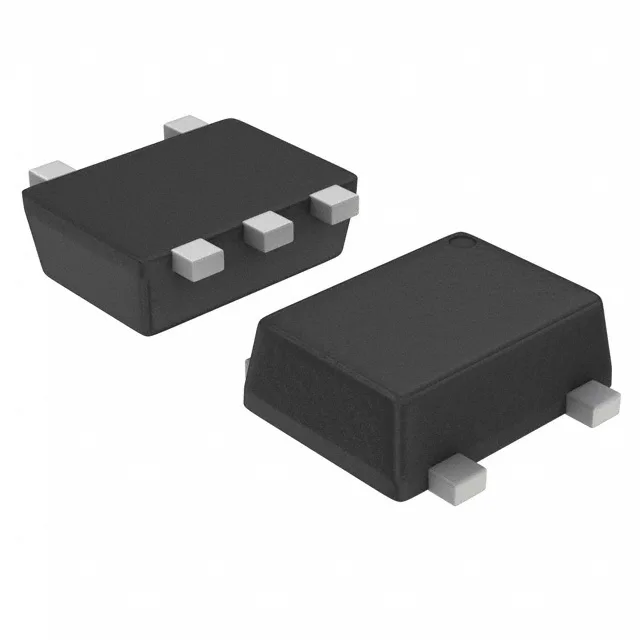
Toshiba Semiconductor TCR2EE17,LM(CT — Discrete Semiconductors

Toshiba TCR2EE17,LM(CT LDO, 1.7V fixed, 200mA, SOT-553

MPNTCR2EE17,LM(CT
End of Life

Toshiba Semiconductor TCR2EE series, linear voltage regulator, fixed 1.7 V output, 200 mA, SOT-553, surface mount, enable pin, over-current protection.

$0.36Ref. price · indicative, final on quote
PackagingSOT-553
StockIn Stock (22)
Lead timeIn Stock wk
MOQ1 pcs
  • 100% new & originalTraceable channels only — no refurbs, no pulls, no remarked parts.
  • Date & lot codes on quoteStated per line before you commit; label photos on request.
  • MSL-compliant ESD packingMoisture-sealed bags with indicator cards; reels photo-verified.
  • PayPal buyer protectionPay by T/T, PayPal or Payoneer — card payments covered end to end.

Specifications

TCR2EE17,LM(CT Technical Specifications
ParameterValue
SeriesTCR2EE
Output typeFixed
Mounting typeSurface Mount
Voltage - input5.5V
Voltage dropout0.7V @ 300mA
Voltage - output (Min (Fixed))1.7V
Current - output200mA
Current - quiescent60 µA
Operating temperature-40°C ~ 85°C
PSRR73dB (1kHz)
PackageTape & Reel (TR); Cut Tape (CT)
CaseSOT-553
Control featuresEnable
Protection featuresOver Current
Number of regulators1
Output configurationPositive

Product details

The Toshiba TCR2EE17,LM(CT is a fixed-output LDO delivering 1.7 V at up to 200 mA from a SOT-553 package. The 73 dB PSRR at 1 kHz means that ripple on the input rail up to 5.5 V is attenuated by a factor of roughly 4500 at that frequency — useful for powering analog front-ends or sensor bias where the upstream supply carries switching noise.

Dropout and quiescent — the real-world headroom and standby drain

Maximum dropout is 0.7 V at 300 mA load — the input rail must stay at least 0.7 V above 1.7 V to maintain regulation at that current. At 200 mA typical load the dropout is lower, but the worst-case figure governs the design margin. Quiescent current is 60 µA typical — the regulator's own draw is low enough for battery-powered equipment that spends most of its time in sleep, though not at the sub-µA level of dedicated ultra-low-Iq parts. The enable pin lets the system shut down the output for power sequencing or standby — when pulled low the output goes high-impedance and the quiescent current drops further.

Industrial temperature range and protection — where it fits

Built-in over-current protection limits the output during a fault — the regulator folds back rather than latching off, so it self-recovers when the overload clears. The SOT-553 footprint is 1.6 mm × 1.6 mm — the smallest package in the TCR2EE family.

Active lifecycle — no obsolescence risk on this order code

RoHS non-compliant — the part contains lead (Pb) above the 0.1% threshold. This is typical for legacy or high-reliability lots that use tin-lead plating. If your BOM requires RoHS compliance, the TCR2EE17,LM(CT does not meet it; a Pb-free variant would carry a different suffix.

Sourced through independent distribution channels.

Frequently asked questions

What is the PSRR of TCR2EE17,LM(CT?

73 dB at 1 kHz. This is the ripple rejection at that frequency — the higher the number, the more the regulator cleans up switching noise on the input rail. At lower frequencies the PSRR is typically higher; above 100 kHz it rolls off.

Will TCR2EE17,LM(CT drop into a board designed for TCR2EE185,LM(CT?

Yes — same package (SOT-553), same pinout, same enable and protection features. The only difference is the fixed output voltage: TCR2EE17,LM(CT regulates to 1.7 V, while TCR2EE185,LM(CT regulates to 1.85 V. If the downstream load requires exactly 1.85 V, the 1.7 V part will not substitute without a board-level change.