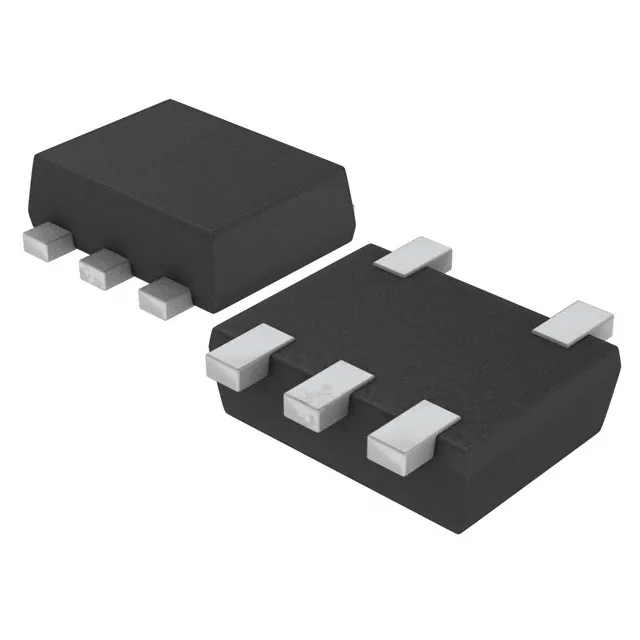
Toshiba Semiconductor TAR5S16U(TE85L,F) — Discrete Semiconductors

Toshiba TAR5S16U(TE85L,F) LDO Regulator, 1.6V Fixed, 200mA

MPNTAR5S16U(TE85L,F)
End of Life

Toshiba Semiconductor TAR5S16U(TE85L,F) LDO voltage regulator, 1.6V fixed output, 200mA, 70dB PSRR (1kHz), 6-SMD flat lead UFV package, active.

$0.63Ref. price · indicative, final on quote
Packaging6-SMD (5 Leads), Flat Lead
StockContact for availability
Lead timeIn Stock wk
MOQ1 pcs
  • 100% new & originalTraceable channels only — no refurbs, no pulls, no remarked parts.
  • Date & lot codes on quoteStated per line before you commit; label photos on request.
  • MSL-compliant ESD packingMoisture-sealed bags with indicator cards; reels photo-verified.
  • PayPal buyer protectionPay by T/T, PayPal or Payoneer — card payments covered end to end.

Specifications

TAR5S16U(TE85L,F) Technical Specifications
ParameterValue
Output typeFixed
Mounting typeSurface Mount
Voltage - input15V
Voltage - output (Min (Fixed))1.6V
Current - output200mA
Current - supply850 µA
Operating temperature-40°C ~ 85°C
PSRR70dB (1kHz)
PackageTape & Reel (TR); Cut Tape (CT)
Case6-SMD (5 Leads), Flat Lead
Control featuresEnable
Protection featuresOver Current, Over Temperature
Number of regulators1
Output configurationPositive

Product details

The Toshiba TAR5S16U(TE85L,F) is a single-output positive fixed LDO regulator delivering 1.6 V at up to 200 mA, with a power-supply rejection ratio of 70 dB at 1 kHz. That PSRR figure means ripple on the input rail at 1 kHz is attenuated by a factor of about 3,160 — relevant when the regulator sits downstream of a switching converter whose fundamental or harmonics fall near that frequency. The 15 V maximum input gives headroom for unregulated rails or 12 V intermediate buses. The UFV package (6-SMD, 5 leads, flat lead) keeps the footprint compact for space-constrained PCBs.

Active production, RoHS constraint — a sourcing detail that matters

Built-in protection features — over-current and over-temperature — mean the regulator handles fault conditions without requiring an external supervisor or crowbar circuit. The enable pin allows a logic-level signal to shut down the output, useful for power sequencing or dropping into a low-power sleep state where the 850 µA max supply current becomes the floor draw.

Peer parts — same family, different output voltage

The TAR5S16U sits in a family of fixed-output LDOs that share the same 70 dB PSRR, 200 mA rating, UFV package, and protection feature set. The TAR5S18U(TE85L,F) outputs 1.8 V, the TAR5SB33(TE85L,F) and TAR5S33UTE85LF both output 3.3 V. The only parametric difference across these peers is the fixed output voltage — footprint, pinout, and thermal performance are identical, so a board laid out for one can accept any of them by changing only the BOM line, provided the downstream load tolerates the voltage shift.

Frequently asked questions

What is the PSRR of TAR5S16U(TE85L,F) and why does it matter?

The TAR5S16U(TE85L,F) offers 70 dB power-supply rejection at 1 kHz. That level of attenuation means ripple from a switching pre-regulator at 1 kHz is suppressed by roughly 3,160 times — critical for supplying clean 1.6 V to noise-sensitive analog or RF stages where supply ripple couples into the signal path.

Will TAR5S16U(TE85L,F) drop into a board designed for TAR5S18U(TE85L,F)?

Yes, the TAR5S16U and TAR5S18U share the same package (UFV, 6-SMD flat lead), pinout, and protection features. The only difference is the fixed output voltage — 1.6 V vs 1.8 V. A board laid out for one will physically accept the other, but the downstream load must tolerate the voltage change. No rewiring or footprint change is needed.