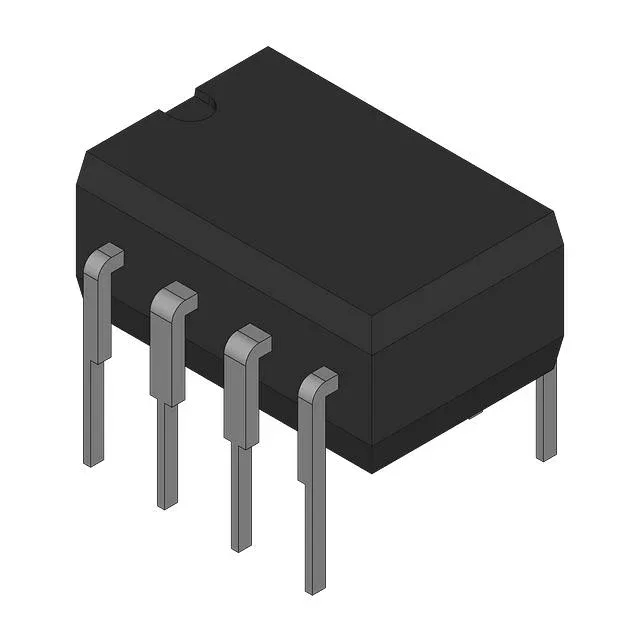
4A peak drive in an 8-pin DIP — what it buys you
It is qualified to AEC-Q100, so the die and package have passed the automotive-grade reliability suite — 1000-hour HTRB, temperature cycling, and autoclave. The inverting input logic means a logic-high on the input pin turns the output low; the independent channel architecture lets you drive two separate MOSFETs with their own timing, or parallel the channels for a 8A effective drive into a single gate.
Operating supply spans 4V to 15V, covering the common gate-drive rails for automotive systems — 5V logic rails, 12V battery-derived rails, and intermediate 8V or 10V regulated supplies. The logic thresholds are 1V VIL and 2V VIH, so a 3.3V or 5V logic output from an MCU or DSP drives the input directly without a level shifter. The 8-PDIP package (0.300-inch body) is a through-hole part — it suits prototype boards, high-vibration harnessed assemblies, and designs where the driver sits on a separate power board from the control logic.
The AEC-Q100 qualification means the part was tested to the stress conditions defined in the standard — a procurement signal that the manufacturer has locked the die and assembly process for the automotive market.
For volume production, the part is single-sourced from Texas Instruments; no official second-source cross-reference appears in the record, so dual-sourcing requires a qualification effort on a functionally equivalent part from another vendor.