Switching frequency and topology flexibility
The 80 kHz to 700 kHz range lets you tune the power stage. The controller handles flyback for isolated designs, SEPIC for battery-voltage ranges that cross the LED string voltage, and buck or boost for conventional step-down or step-up strings. One BOM line covers multiple platforms if the LED voltage and current requirements fall within the 65 V output rating.
Dimming methods and output control
Both analog and PWM dimming are supported. Analog dimming adjusts the LED current continuously for applications where PWM noise is undesirable (interior ambient lighting, display backlighting). PWM dimming gives a wider effective dimming ratio and is the standard choice for headlamp low-beam / high-beam switching or DRL intensity steps. The single output drives one LED string; multiple controllers are ganged for multi-channel designs such as matrix headlamps.
Packaging and mounting
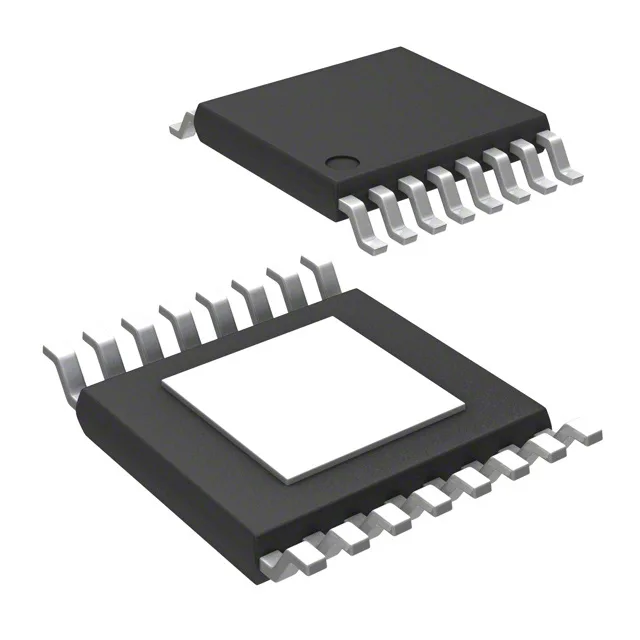
The 16-HTSSOP package (4.40 mm width, exposed thermal pad) is a surface-mount PowerTSSOP.