500 mA LDO with 2.6 µA quiescent — the load and standby budget
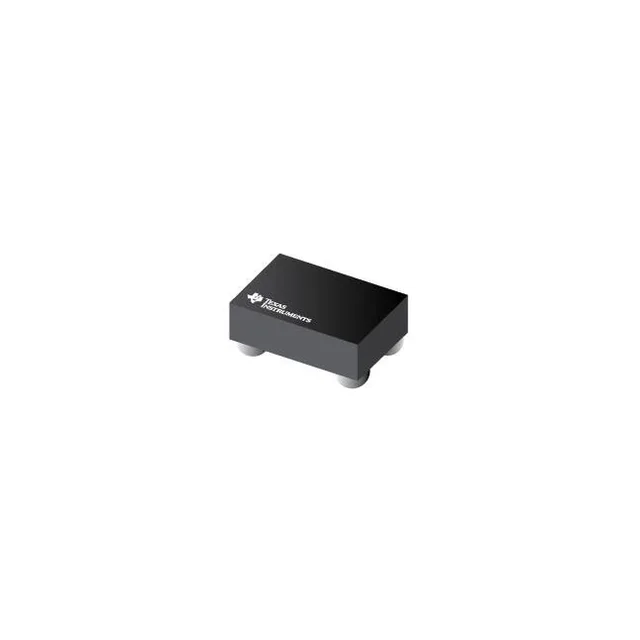
The TPS7A1119PYKAR is a 500 mA low-dropout linear regulator from Texas Instruments, fixed 1.9 V output, in a 5-pin DSBGA package. Its 2.6 µA quiescent current makes it suited for battery-powered or always-on subsystems where the regulator's own draw must stay below the system's sleep budget. Maximum dropout is 110 mV at the full 500 mA load, meaning the input rail must stay at least 110 mV above 1.9 V across the load range to maintain regulation. The 3.3 V maximum input voltage confirms this is a low-VIN LDO designed for sub-3.3 V rails — not for 5 V or 12 V intermediate buses.
PSRR profile — noise rejection across the switching band
Power-supply rejection ratio is specified at 64 dB at 1 kHz, rolling off to 35 dB at 1.5 MHz. This profile matters when the LDO follows a switching regulator: the 64 dB at 1 kHz catches the fundamental ripple of a typical 400 kHz–1 MHz buck converter, but the 35 dB at 1.5 MHz means high-frequency switching harmonics above 1 MHz pass through with less attenuation. A downstream LC filter or a second LDO stage may be needed for noise-sensitive analog loads.
Junction temperature range and protection
The protection suite includes overcurrent, overtemperature, and undervoltage lockout — the UVLO prevents the output from sourcing current into a shorted or pre-biased load during startup. The enable pin allows the regulator to be gated by a system supervisor or GPIO, pulling the quiescent current to near zero when the load is shut down.