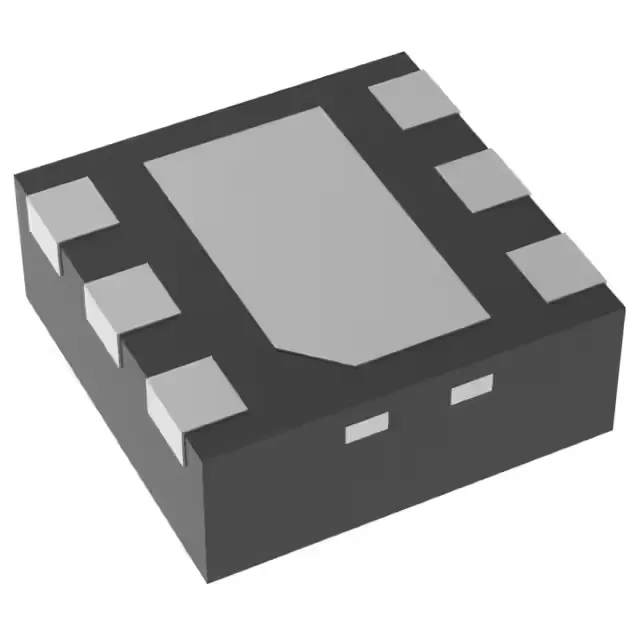
Package and board integration — 6-WSON with exposed pad
The TPS7A1112PDRVT comes in a 6-WDFN Exposed Pad package, supplier device package 6-WSON (2x2 mm). Surface-mount only. The 2x2 mm footprint with a single exposed pad is reworkable with hot air if the board has adequate thermal relief vias under the pad — but the pad draws heat fast, so preheat the board to 100°C before lifting the part to avoid lifting the pad.
Dropout voltage and headroom — 0.14V at full load
Maximum dropout voltage is 0.14V at 500 mA output. With a 3.3V max input, there is plenty of headroom — but if the input is a 1.5V rail, the margin is tight and a lower-dropout part may be needed. The fixed 1.2V output is set internally — no external resistor divider needed. The enable pin lets the system shut down the regulator when the load is idle, cutting the 2.6 µA quiescent current to near zero.
PSRR across frequency — noise rejection for sensitive loads
PSRR is 64 dB at 1 kHz, dropping to 35 dB at 1.5 MHz. This is a typical roll-off for a low-Iq LDO — the control loop gain falls above the crossover frequency. For a 2.2 MHz switching regulator feeding this LDO, the noise at the switching frequency will see only 35 dB of rejection, so a post-filter LC stage ahead of the LDO input may be needed if the load is noise-sensitive (ADC reference, RF VCO). The 11 µA maximum supply current (including the pass element) means the LDO's own noise contribution is low — the dominant noise source in the output will be the input ripple that leaks through at high frequencies.
Protection features — OCP, OTP, UVLO
Built-in over-current protection limits the output current during a fault; over-temperature protection shuts the regulator down if the junction exceeds the thermal limit; under-voltage lockout prevents the output from turning on until the input rail is above the UVLO threshold. These three protections let the part survive a shorted load or a stalled fan without external foldback circuitry.