200 mA LDO for battery-powered rails
The TPS7A0530PDBZT is a 200 mA fixed-output LDO from Texas Instruments, regulating to 3 V from a maximum 5.5 V input rail. Its 3 µA quiescent current makes it a fit for always-on or sleep-mode supplies where the regulator's own draw must stay below the battery self-discharge rate.
40 dB PSRR across 1 kHz to 1 MHz
PSRR is specified at 40 dB from 1 kHz through 1 MHz — a wideband floor that attenuates switching-regulator ripple and digital noise across the typical spectrum of a DC-DC converter fundamental and its harmonics. Below 1 kHz the rejection is higher; the 40 dB figure is the minimum across the stated band, so a 100 mVpp ripple at 500 kHz from a buck converter reaches the output at roughly 1 mVpp. Maximum dropout is 308 mV at the full 200 mA load. For a 3 V output, the input must stay above 3.308 V across all conditions — a 3.3 V rail leaves only 22 mV of headroom, so a 3.6 V or 5 V supply is the practical choice for this part.
Active production, SOT-23-3 footprint
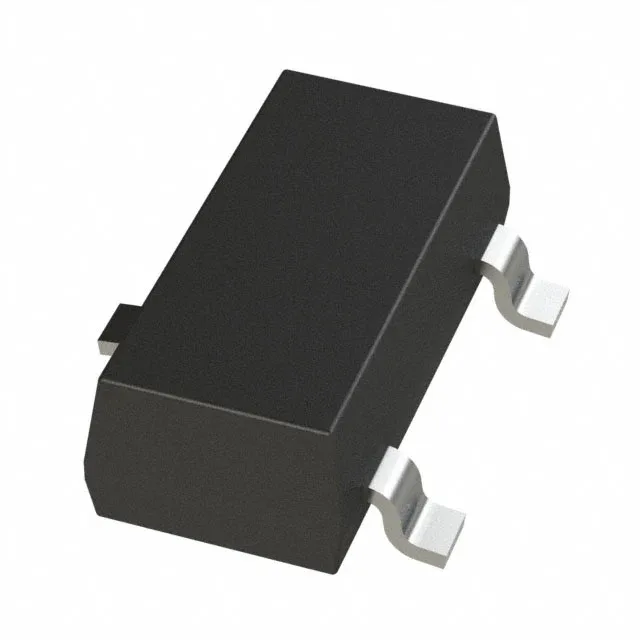
The SOT-23-3 package (TO-236-3, SC-59 alternative) is a three-pin surface-mount footprint with a 0.95 mm pitch — standard for low-power linear regulators and compatible with common reflow profiles. Operating junction temperature spans -40 °C to 125 °C, covering automotive under-hood and industrial enclosure environments. Protection features include over-current, over-temperature, and undervoltage lockout (UVLO) — the regulator shuts down cleanly without output glitches during brownout conditions.