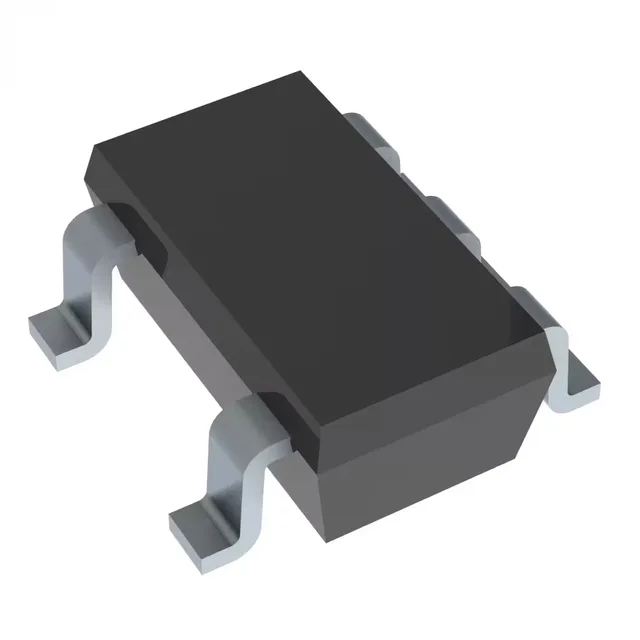
2.5 V fixed output with Enable, 85 dB PSRR — the so-what for noise-sensitive rails
The TPS78925DBVT: The Enable pin lets the system microcontroller gate the regulator off entirely — drawing only the 28 µA quiescent current when disabled — which is the difference between a battery-powered sensor node lasting a season versus a month in sleep mode. The 85 dB PSRR at 1 kHz means that ripple from an upstream switching regulator — say a buck converter switching at 1 kHz — is attenuated by a factor of roughly 18,000 before it reaches the analog load.
Protection set that covers the common field faults
Over-current and over-temperature shut-down are standard on most LDOs, but the reverse-polarity protection is the differentiator here — it clamps a miswired battery or reversed input without needing an external Schottky diode in series. In an automotive or industrial 24 V panel where the field-wiring polarity is not always verified, this saves a board spin. The -40°C to 125°C operating range covers the full automotive temperature band — under-hood ECUs that see 105°C ambient and 125°C junction have margin. The SOT-23-5 footprint fits a standard 2.9 mm × 1.6 mm land pattern; the thermal pad on the PCB is the only heatsink, so the 100 mA output at 125°C ambient requires the copper area recommended in the datasheet's thermal table.