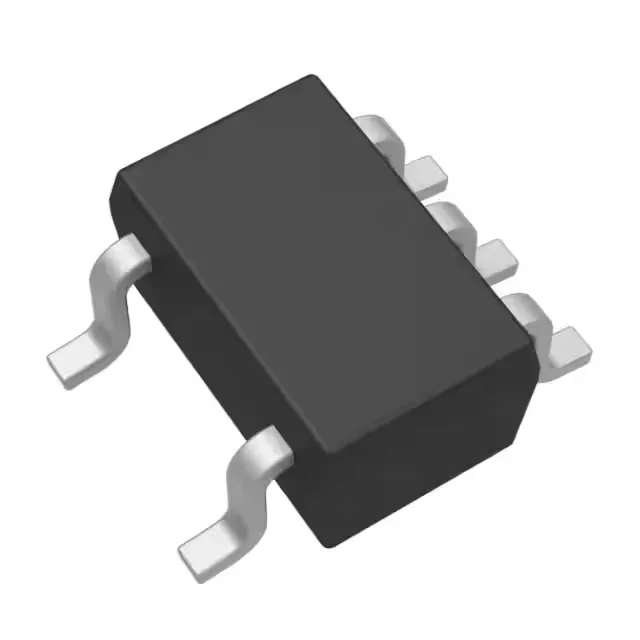
Texas Instruments TPS71726DCKT — Power Management (PMIC / Gate Driver)

Texas Instruments TPS71726DCKT LDO, 150 mA, 2.6 V Fixed

MPNTPS71726DCKT
End of Life

Texas Instruments TPS71726DCKT LDO linear regulator, 150 mA, 2.6 V fixed output, SC-70-5, PSRR 70 dB ~ 45 dB (100 Hz ~ 1 MHz), -40°C to 125°C.

$1.61Ref. price · indicative, final on quote
Packaging5-TSSOP, SC-70-5, SOT-353
RoHSROHS3 Compliant
Sourced new & surplus through independent channelsAuthenticity-screened · ESD-safe packingListing updated Aug 2026

Specifications

TPS71726DCKT specifications
ParameterValue
Output typeFixed
MountingSurface Mount
Voltage - input6.5V
Voltage dropout0.3V @ 150mA
Voltage - output (Min (Fixed))2.6V
Output current150mA
Current - supply100 µA
Current - quiescent80 µA
Operating temperature-40°C ~ 125°C
PSRR70dB ~ 45dB (100Hz ~ 1MHz)
PackageTape & Reel (TR); Cut Tape (CT)
Case5-TSSOP, SC-70-5, SOT-353
Control featuresEnable
Protection featuresOver Current, Over Temperature, Reverse Polarity, Under Voltage Lockout (UVLO)
Number of regulators1
Output configurationPositive

Product details

Active production — what that means for your BOM

The TPS71726DCKT is listed as Active — Texas Instruments continues to manufacture it, so new designs can commit to this part without an imminent last-time-buy clock. ROHS3 compliant, no lead or restricted substance concerns for EU-market boards.

150 mA LDO — the PSRR is the headline

This is a single-output positive LDO, fixed at 2.6 V, delivering up to 150 mA. The PSRR spec — 70 dB at 100 Hz, rolling to 45 dB at 1 MHz — tells you where this regulator earns its keep: it cleans up low-frequency ripple from a switching pre-regulator or a noisy rail feeding an analog front-end. At 1 MHz the 45 dB still gives roughly 180:1 rejection, enough to keep a 10 mV switching ripple below 60 µV at the output. Dropout is 0.3 V max at full load — the input rail needs to stay above 2.9 V to hold regulation. Quiescent current is 80 µA typical, max 100 µA, so the regulator's own draw won't eat into the 150 mA budget in a battery-powered design.

Protection set and temperature range

Over-current, over-temperature, reverse polarity, and under-voltage lockout are all on-chip — no external supervisor needed for basic fault handling. The Enable pin lets a processor or a power sequencer gate the output — useful for sequencing multiple rails on power-up.

Frequently asked questions

What is the PSRR of TPS71726DCKT?

The PSRR is 70 dB at 100 Hz, rolling to 45 dB at 1 MHz. This makes it suitable for cleaning ripple from switching supplies feeding sensitive analog loads.