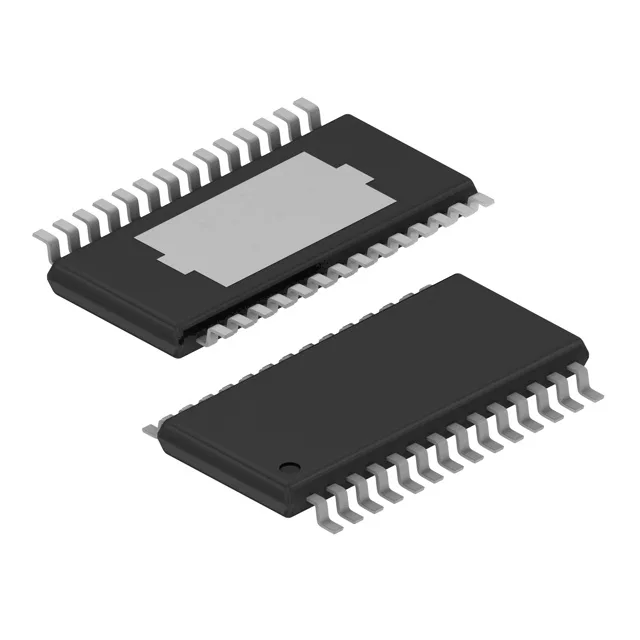
8 A buck with synchronous rectifier — the headline spec that drives the BOM
The TPS54810PWP is a single-output, adjustable step-down buck converter from TI's SWIFT™ series, rated for a continuous 8 A output. That 8 A figure is the load it can deliver at the output pin before the internal FETs hit their thermal limit — in a real 85 °C enclosure the current derates, but the raw number tells you this part sits in the mid-power point-of-load slot, not the sub-3 A range. Synchronous rectification is built in, so the low-side FET replaces the catch diode — efficiency holds up at low output voltages where a diode's forward drop would eat the margin. The switching frequency is pin-selectable between 350 kHz and 550 kHz; the lower setting reduces gate-drive losses, the higher setting shrinks the inductor and output cap footprint.
Voltage rails and the adjustable output trap
Input range is 4 V minimum to 6 V maximum — this is a 5 V rail part, not a wide-VIN converter. The output adjusts from a 0.9 V floor up to 3.3 V, set by an external resistor divider. The 0.9 V minimum means it can power a 1.0 V core rail with headroom, but if your BOM calls for 0.8 V, this part cannot hit it — the 0.9 V floor is the feedback reference limit, not a configuration choice. If the ambient inside the enclosure regularly exceeds 85 °C, the junction temperature will climb past the 125 °C abs-max and trigger thermal shutdown.
Package reality — 28-HTSSOP with exposed pad
Without that, the 8 A rating is theoretical; the part will hit thermal limit below 5 A in still air. Supplier device package is 28-HTSSOP, which is the same mechanical footprint as the PowerTSSOP but with the thermal-pad tie. The tube packaging means it ships in a plastic tube, not tape-and-reel — factor that into your pick-and-place feeder setup if you are running a reel-only line.