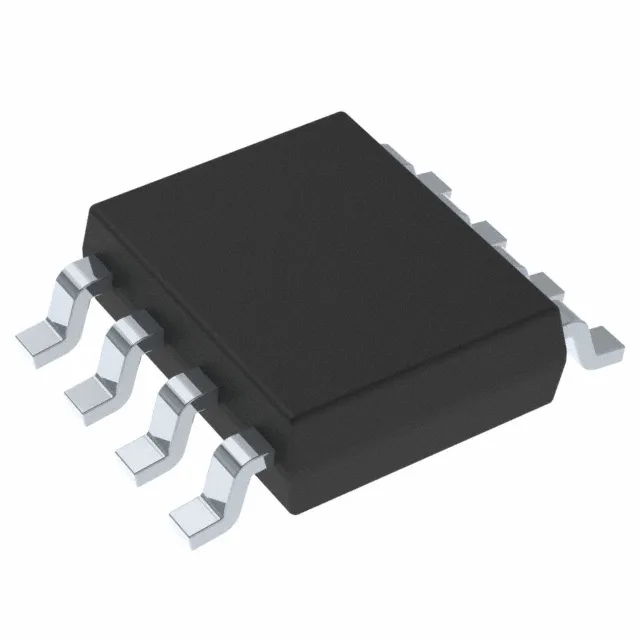
3A buck for 5V and 12V rails
The TPS54329DDA is a single-output step-down buck converter from Texas Instruments' D-CAP2™ family, delivering up to 3 A from a 4.5 V to 18 V input rail. That input window covers common 5 V and 12 V intermediate buses, plus unregulated supplies from 2-cell Li-ion stacks up to 18 V.
Output voltage range and synchronous rectification
The adjustable output can be set from 0.76 V up to 7 V via an external resistor divider. The 0.76 V floor makes it suitable for powering low-voltage core rails on MCUs and FPGAs that require sub-1 V supplies. The integrated synchronous rectifier eliminates the external Schottky diode that older non-synchronous bucks need. This improves efficiency at high step-down ratios — for example, 12 V in to 1.2 V out — where the freewheeling diode's forward drop would otherwise dominate conduction losses.
Thermal and layout considerations
The datasheet's recommended footprint uses a 3×3 array of 0.3 mm vias under the pad; without them, the junction-to-board thermal resistance rises significantly and the 3 A continuous rating may not be achievable at 85 °C ambient.
The part is ROHS3 compliant, which means it meets the current EU RoHS exemption limits for lead-free soldering processes.