Dual-phase synchronous buck controller for 4.5-28V rails
The TPS5120DBTR is a dual-output synchronous buck controller from Texas Instruments, designed to step down input voltages from 4.5V to 28V using a buck topology with synchronous rectification. The 300kHz fixed switching frequency targets low-ripple power rails for DSPs, FPGAs, and multi-rail logic boards where two independent or interleaved outputs share the same input bus.
2-phase control with enable, power-good, and soft-start sequencing
Two output phases and two independent outputs let the controller drive separate point-of-load rails or interleave them for lower input ripple on a single high-current rail. The enable pin gates the controller on command; the power-good output signals when both rails are within regulation — a clean handshake for downstream load sequencing. Soft-start ramps the output voltage on each channel, preventing inrush current from tripping the upstream supply. The 83% maximum duty cycle defines the headroom between input and output: at 5V input the lowest regulated output is about 4.15V, so this part is best suited for moderate step-down ratios, not ultra-low dropout.
30-TSSOP footprint for compact power-stage layout
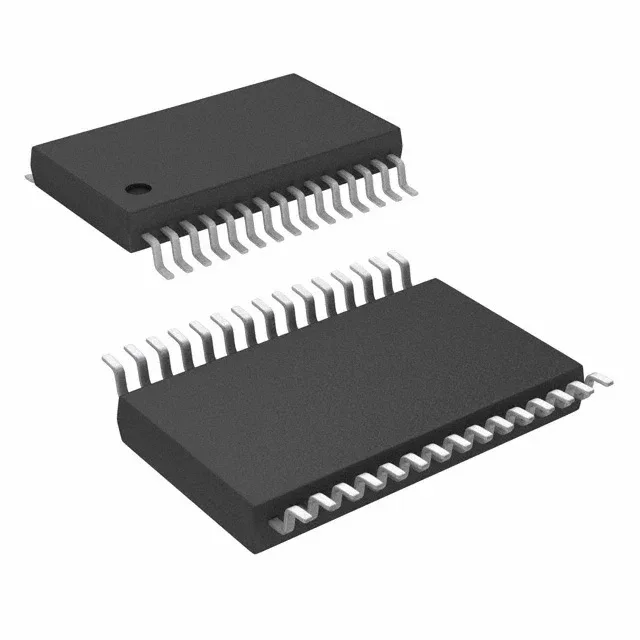
The 30-lead TFSOP (4.40mm body width) and its supplier-device package alias 30-TSSOP place the controller in a narrow SOIC-like footprint. The pin pitch and body size allow routing on a 2-layer board for moderate-current designs, though a 4-layer stack with a dedicated ground plane improves thermal dissipation from the exposed pad. Tape & Reel and Cut Tape packaging options support both volume reflow and prototype hand-assembly.