4.2 V threshold — matching the monitored rail
The 4.2 V threshold is designed for 5 V nominal rails, typically found in industrial control boards, PLC I/O modules, and sensor interfaces where a clean power-up sequence is required.
Active-low open-drain output — daisy-chain and level-shift ready
The reset output is active-low open-drain, which means it can be wire-ORed with other reset supervisors and pulled up to any voltage within the absolute maximum rating of the open-drain transistor. This is the standard interface for multi-rail systems where a single reset signal must be shared across a 3.3 V MCU and a 5 V peripheral — the pull-up resistor sets the logic level independently of the IC's supply. The open-drain output also allows the reset line to be driven low by an external push-button or test header without contention.
619 ms timeout — power-up sequencing window
The 619 ms typical reset timeout is long enough to cover the start-up settling time of most switching regulators and crystal oscillators used with 32-bit MCUs in the 48–120 MHz range. For systems that need a shorter or longer delay, the timeout is fixed internally — no external capacitor needed.
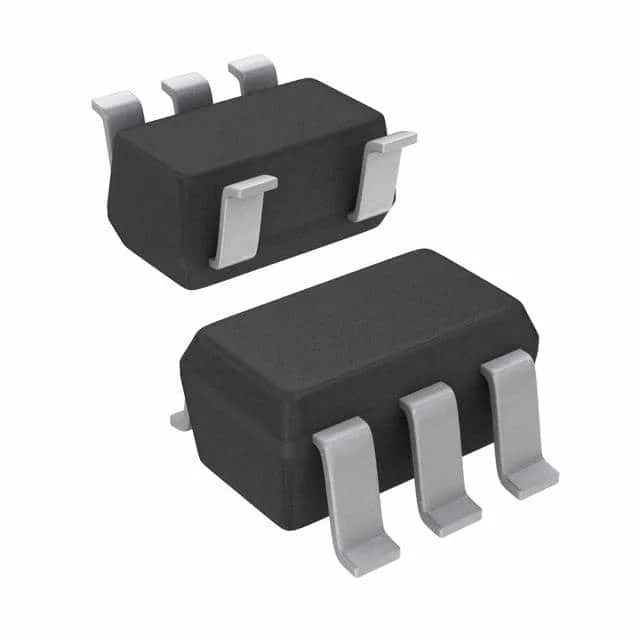
The SOT-23-5 package (SC-74A, SOT-753) is a standard footprint that fits into compact designs without requiring a dedicated thermal pad — the junction-to-ambient thermal resistance is low enough for the sub-mA quiescent current of this reset IC.
This is a standard-voltage supervisor in a common package, so the supply chain risk is low.