0.9V threshold — the reset trip for low-voltage rails
That 0.9V threshold is set for modern low-voltage core rails — think 1.0V or 1.2V DSP cores, FPGA logic banks, or MCU VDD — where a 0.9V trip point catches a brownout before the digital logic starts behaving unpredictably.
120 ms timeout — why it matters for startup sequencing
That means after the monitored voltage rises above the threshold, the reset output stays asserted for at least 120 ms before releasing the processor. This gives the supply rail time to settle and the oscillator time to stabilize before the CPU starts executing code. If your system has a fast-ramping supply, the 120 ms window is generous enough to cover most ceramic-cap decoupling scenarios.
Active-low push-pull output — no external pull-up needed
The reset output is active low and push-pull (totem pole). That means the output drives both high and low — no open-drain, so you do not need an external pull-up resistor to VDD. The push-pull stage holds the reset line cleanly at ground during the fault condition and drives it to the supply rail when the timeout expires. This simplifies the BOM and saves a resistor per reset line.
1x1 mm X2SON — footprint and rework considerations
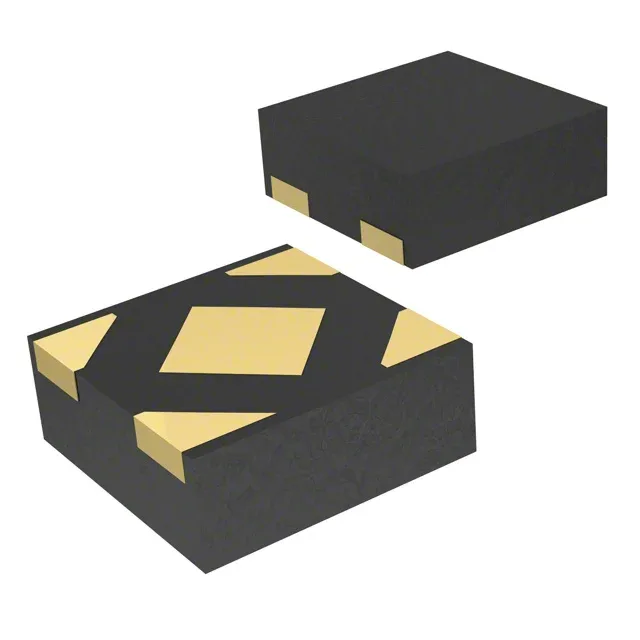
The TPS3839A09DQNT comes in a 4-X2SON package measuring 1x1 mm (supplier device package 4-X2SON). That is a tiny, leadless package with an exposed pad underneath. For rework, the small pad area means the part is sensitive to solder-paste volume — too much paste and the part floats; too little and the pad wets poorly. A stencil aperture of about 75% of the pad area is a good starting point.