2.93V threshold — why it matters for a 3.3V rail
That threshold is deliberately set below the nominal 3.3V rail — it gives the processor a clean reset before the supply falls below the minimum operating voltage of most 3.3V logic, typically around 2.7V to 3.0V. The push-pull output drives the reset line without needing an external pull-up resistor, which saves a component on the BOM.
10ms reset timeout — boot stability
For a typical MCU with a 16 MHz crystal, the startup time is a few milliseconds; the 10ms window covers that comfortably. If the timeout were shorter, the processor could start executing code before the supply is fully stable, causing spurious resets or brown-out corruption.
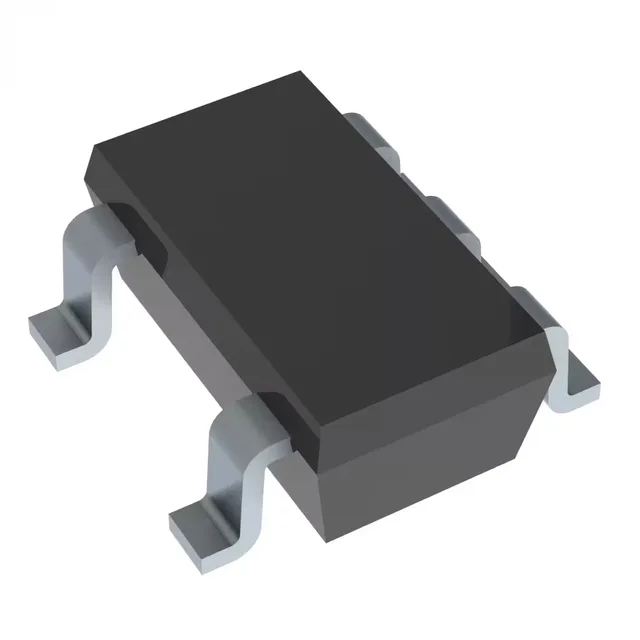
SOT-23-5 — rework-friendly footprint
The SOT-23-5 package (SC-74A, SOT-753) is a five-pin surface-mount package with 0.95 mm pitch on the outer leads. It is small enough to fit on tight layouts but large enough to hand-rework with a standard hot-air station — no underfill, no hidden pads. The thermal mass is low, so a 300°C hot-air profile at low airflow lifts the part cleanly without cooking adjacent components.
Temperature range and supply monitoring
The IC monitors a single voltage, so it is a straightforward fit for a single-rail 3.3V system. For multi-rail designs, you would need a separate supervisor per rail or a multi-channel part.