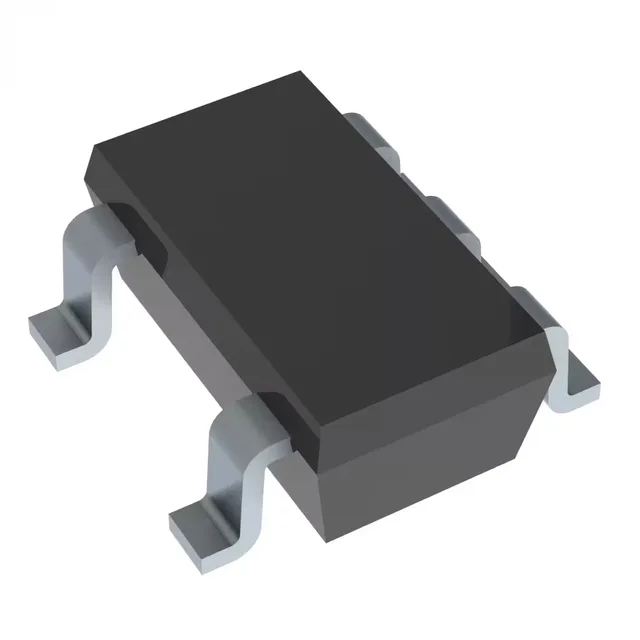
2.63V threshold — which rail it watches
That threshold is set for supervising a nominal 2.5V or 3.0V supply rail — not a 3.3V rail. The 2.63V threshold sits about 12% below a 3.0V rail, giving the supply enough droop headroom before the reset fires, but it will trip early on a 3.3V rail that normally stays above 3.0V. If your BOM calls for 3.3V monitoring, you want the TPS3824-33 variant instead.
120 ms reset timeout — startup margin
The reset timeout is a minimum 120 ms — after the supply rises above the threshold, the output stays asserted for at least that window before releasing the processor from reset. That 120 ms floor gives a typical MCU or DSP enough time for its internal oscillator to stabilize and the boot ROM to begin execution. If your processor needs a longer delay to settle a PLL or wait for an external oscillator, you would need an external RC delay or a supervisor with a programmable timeout.
Active high and active low — dual output flexibility
This part provides both active-high and active-low reset outputs from a single push-pull stage. That means one device can drive the reset pin of a processor that expects a logic-low reset signal and simultaneously feed a status LED or enable line that needs a logic-high during reset. No external inverter needed. The push-pull output eliminates the pull-up resistor required by open-drain supervisors, saving one component per BOM line.
SOT-23-5 footprint and temperature grade
For those, look at the automotive-qualified TPS3824-Q1 family.