2.64V threshold — the trip point that sets the rail
This threshold is tailored for a 3.3V nominal rail — it triggers before the downstream logic sees a brown-out, giving the system time to hold state or perform an orderly shutdown. The active-low, open-drain output lets multiple reset sources share a common pull-up resistor, which is the standard topology for multi-rail systems where a supervisor and a watchdog share the same reset bus.
20 ms timeout — debounce the rail glitch
The minimum reset timeout of 20 ms filters out short supply transients — a rail dip that recovers within that window does not trigger a full system reset. That is long enough to ignore a load-step transient on a 3.3V rail feeding a modest digital load, but short enough that a sustained brown-out still gets caught before the downstream MCU or FPGA loses its register state.
SOT-23-6 footprint — board area and routing
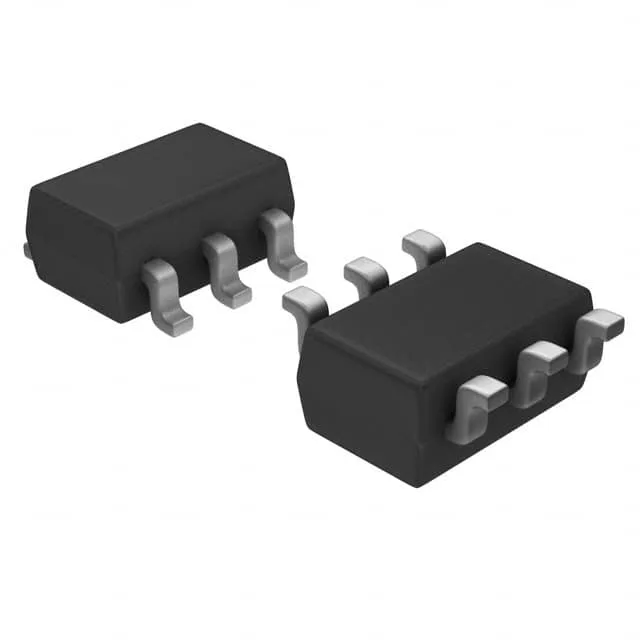
The SOT-23-6 package is a compact 6-pin surface-mount footprint with 0.95 mm pitch. It routes cleanly on a two-layer PCB — the supply, ground, reset output, and MR (manual reset, if used) pins fan out without requiring buried vias. The small body saves board area compared to an SOIC-8 supervisor, which matters when the reset IC sits near the processor in a space-constrained design.
The base product number TPS3813 covers a family of threshold options, so if a future design needs a different trip point, the pin-compatible sibling in the same SOT-23-6 footprint is a straightforward swap.