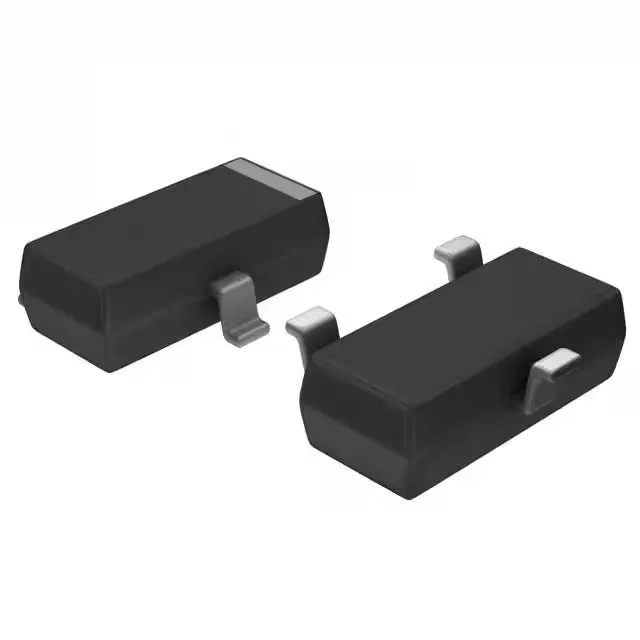
Automotive reset supervisor in SOT-23-3
The reset output is push-pull totem-pole, which means no external pull-up resistor is needed on the reset line to the downstream microcontroller or ASIC. This saves one component per rail and simplifies the BOM for high-volume automotive ECU designs.
The 2.25V threshold is set for monitoring a 2.5V or 3.3V rail with a reset trip point that catches brown-out conditions before logic corruption occurs. For a 3.3V rail, the 2.25V threshold provides roughly 32% undervoltage detection — typical for automotive MCUs that require reset below 2.5V. The minimum reset timeout of 120ms gives the power supply time to stabilise after power-up before the processor begins executing code. This is long enough to cover most ceramic-cap-based LDO start-up profiles in automotive modules. Because the part monitors only one voltage, it is suited for single-rail systems or as a dedicated supervisor for a critical core supply in multi-rail designs. Multiple TPS3809 devices can be paralleled per rail if independent monitoring is needed.
No official replacement part number is recorded in the lifecycle data. For new designs, consider the active TPS3809 family variants or a pin-compatible supervisor from a second-source vendor. The base product number TPS3809 indicates the broader family; check the latest TI portfolio for active automotive reset ICs with similar threshold options.