2.64V threshold — the 3.3V rail watchdog
That threshold is the typical undervoltage trip point for a 3.3V rail — it holds the processor in reset until the supply rises above the threshold and stays there for the 240ms minimum reset timeout period. The push-pull, totem-pole output drives the reset pin directly without needing an external pull-up resistor, which saves a component and avoids the indeterminate state an open-drain output sees when its pull-up supply is also ramping.
240ms reset timeout — boot sequencing margin
For a system with a slow-starting DC-DC converter or a large bulk capacitor on the rail, this timeout prevents the MCU from trying to boot before the supply is within regulation. The timeout is a minimum — the actual period is longer at lower temperatures, but the 240ms floor is what the downstream logic sees as the guaranteed hold time.
SC-70-5 footprint and temperature grade
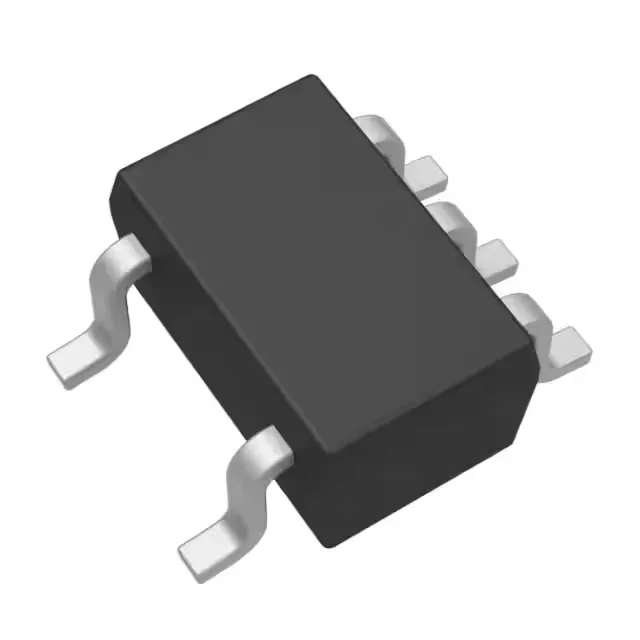
Housed in a 5-pin SC-70-5 (SOT-353) package, this reset IC takes minimal board area — about 2.0 mm × 2.1 mm — and is a surface-mount fit for dense PCB layouts. The single-voltage monitor keeps the BOM simple for designs that only need a supervisor on the main core rail.