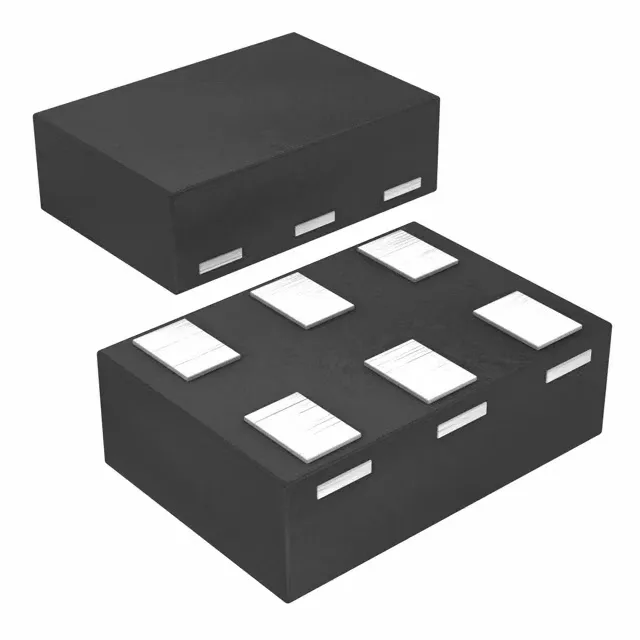
Texas Instruments TPS3779CDRYR — Power Management (PMIC / Gate Driver)

TPS3779CDRYR Multi-Voltage Supervisor, -40°C to 125°C

MPNTPS3779CDRYR
Active

Texas Instruments TPS3779CDRYR multi-voltage supervisor, 2 monitored voltages, active-low push-pull reset output, adjustable/selectable thresholds, -40°C to 125°C, 6-UFDFN package.

$0.8490Ref. price · indicative, final on quote
Independent supplier — new & surplus stockAuthenticity-screened · ESD-safe packingListing updated Jul 2026

Specifications

TPS3779CDRYR specifications
ParameterValue
TypeMulti-Voltage Supervisor
MountingSurface Mount
Voltage - thresholdAdjustable/Selectable
Number of voltages monitored2
Operating temperature-40°C~125°C(TJ)
ResetActive Low
OutputPush-Pull, Totem Pole
PackageTape & Reel (TR); Cut Tape (CT)
Case6-UFDFN

Product details

Two-rail supervisor for industrial power sequencing

The Texas Instruments TPS3779CDRYR is a multi-voltage supervisor designed to monitor two independent supply rails and assert an active-low reset when either falls below its programmed threshold.

Threshold flexibility across supply combinations

With adjustable/selectable voltage thresholds, this supervisor can monitor common rail combinations such as 1.8 V and 3.3 V, or 2.5 V and 5.0 V, by setting external resistor dividers.

Housed in a 6-UFDFN package (6-SON, 1.45 mm x 1.0 mm), the TPS3779CDRYR is a surface-mount device that fits tight PCB layouts near the supervised processors.

No official second-source or direct replacement is listed, so dual-sourcing should be validated against the BOM position.

Frequently asked questions

Can TPS3779CDRYR monitor both 1.8V and 3.3V rails?

Yes. The adjustable/selectable voltage threshold feature lets you set each of the two monitored channels independently via external resistor dividers, so common rail combinations like 1.8 V and 3.3 V are straightforward to configure.

What is the output type of the TPS3779CDRYR reset?

The reset output is active-low push-pull (totem pole), which means it can source and sink current directly without an external pull-up resistor. This simplifies the interface to the processor reset pin.