It is designed for 3.3 V systems where the monitored voltage must stay above 2.63 V to keep the processor or logic in a known state. The active-low, push-pull output drives downstream reset inputs without needing an external pull-up resistor, which simplifies the BOM on space-constrained boards.
The 140 ms minimum reset timeout gives the power rail time to stabilize after a brown-out or power-up before the processor is released from reset. This is long enough to cover most bulk-capacitor ramp times in 3.3 V designs without requiring an external delay capacitor. The 2.63 V threshold is set for 3.3 V nominal rails; it asserts reset when the supply falls to about 80% of nominal, which is typical for protecting CMOS logic and MCUs from undefined operation during a sag. If your rail runs at 3.0 V or 5.0 V, this part will not work — the threshold is fixed and not adjustable.
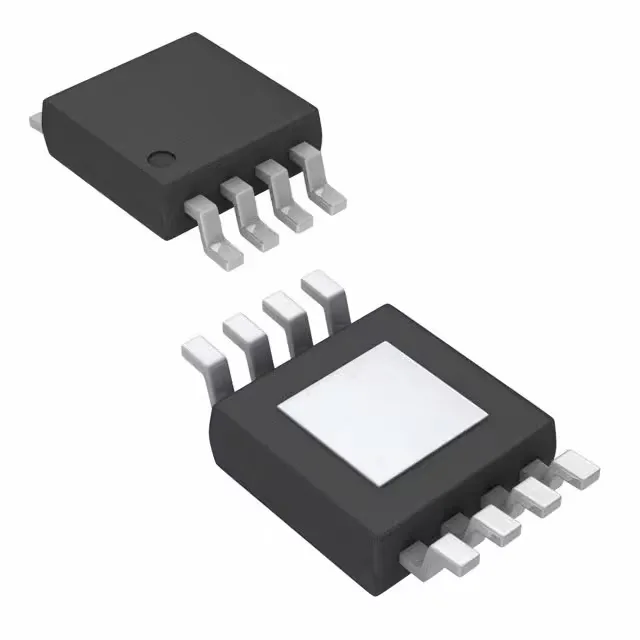
Package and thermal — the exposed pad matters
For a low-power supervisor that draws microamps, the thermal benefit is modest, but in high-ambient environments or when the part sits near hot regulators, the pad helps keep junction temperature within limits. The package footprint is 3.00 mm × 3.00 mm, compatible with standard MSOP-8 land patterns — just add the extra pad for the thermal slug.
The part is ROHS3 compliant.