1.14V threshold — picking the right rail
That threshold targets a 1.2V or 1.8V core rail — not a 3.3V or 5V supply. If your processor or FPGA core runs at 1.2V nominal, this part catches a brown-out before the core logic starts to glitch. The active-low open-drain output lets you pull up the reset line to whatever voltage the processor's reset input expects, independent of the monitored rail.
100ms reset timeout — why it's not too long
The reset timeout is a minimum 100ms. A shorter timeout — say 20ms — risks the processor waking into a supply that hasn't fully settled, causing a second brown-out or a latch-up on some MCU families. For most Cortex-M and ARM9 designs, 100ms is a safe middle ground.
SOT-23-5 — rework-friendly footprint
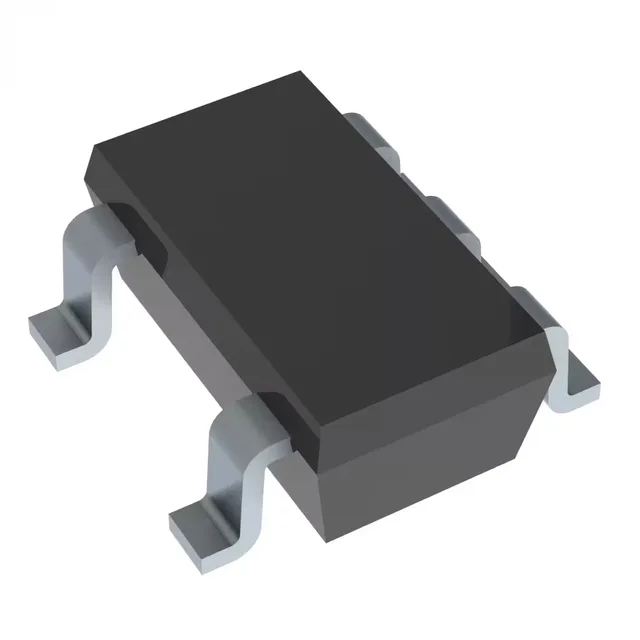
The part comes in a SOT-23-5 package (SC-74A, SOT-753). Five pins, 0.95 mm pitch — easy to hand-solder or rework with a fine-tip iron and hot air. The pin 1 mark is a small dot on the top of the package; it's visible under a loupe but easy to miss if you're not looking. On a rework station, 300°C air at low flow for about 15 seconds lifts it cleanly. No thermal pad underneath, so no risk of hidden solder bridges.
The buyer can commit the BOM line without near-term obsolescence risk.
Not rated for under-hood or downhole environments — those would need a 125°C-rated supervisor like the TPS3808 series.