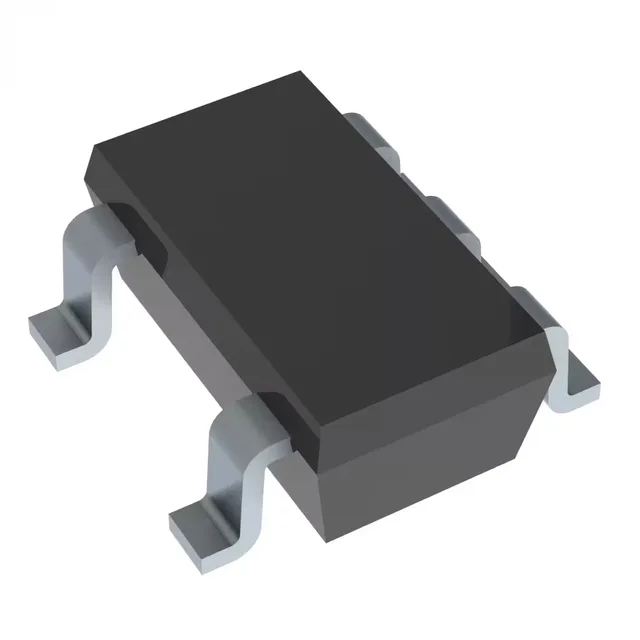
1.4V threshold supervisor in a SOT-23-5
Its 1.4V threshold makes it a fit for low-voltage core rails — 1.2V or 1.5V DSPs, FPGAs, or MCU cores where the supervisor must assert reset before the supply drops below the processor's minimum operating voltage.
100 ms timeout — what it buys the system
That window gives the main supply rail and the processor's internal oscillator time to stabilise before the CPU starts executing code. For a 200 MHz-class MCU or a modest FPGA, 100 ms is generous; for a fast-booting application processor, check whether the timeout delays the system power-on sequence beyond the spec.
Push-pull output with dual polarity assertion
The output stage is push-pull, totem-pole, and asserts both active-high and active-low reset signals. That means a single TPS3125G15DBVTG4 can drive the /RESET input of an MCU that expects a low-true signal and simultaneously drive a high-true enable on a downstream regulator or a status LED. No external pull-up resistor is needed on either output — the push-pull stage sources and sinks current directly.
The SOT-23-5 package (SC-74A) is a standard 5-pin footprint shared across many TI supervisor ICs — the board layout can be reused if a different threshold voltage is needed later.