0.86V threshold — why it matters for low-voltage rails
That 0.86V threshold is deliberately low — it's aimed at keeping a close watch on sub-1V core supplies in DSPs, FPGAs, or low-power MCUs where a 1.0V rail sagging to 0.9V can already cause logic errors before the main supervisor trips. The active-low, open-drain output means you wire a pull-up resistor to the reset line of the processor; the IC sinks current to hold the line low during a fault, and releases it when the supply is good.
65 ms timeout — settling time for the supply
After the monitored voltage rises above the threshold, the TPS3106E09DBVTG4 holds the reset line low for a minimum of 65 ms before releasing it. That delay gives the power rail time to stabilize and the oscillator time to start before the processor begins executing code. If your system has a slow-starting DC-DC converter or a large output capacitor, check that 65 ms is long enough to avoid a premature release; if not, you may need an external capacitor to stretch the timeout — though this part has no timeout-adjust pin, so the 65 ms is fixed.
SOT-23-6 package — rework and layout notes
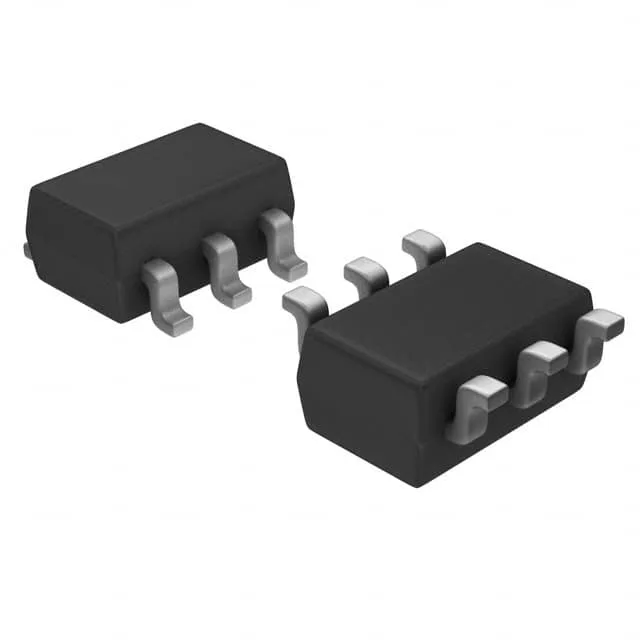
Housed in a SOT-23-6, the TPS3106E09DBVTG4 is a small six-pin package with 0.95 mm pitch. Keep the bypass capacitor within 5 mm of the supply pin to avoid noise coupling into the threshold comparator.