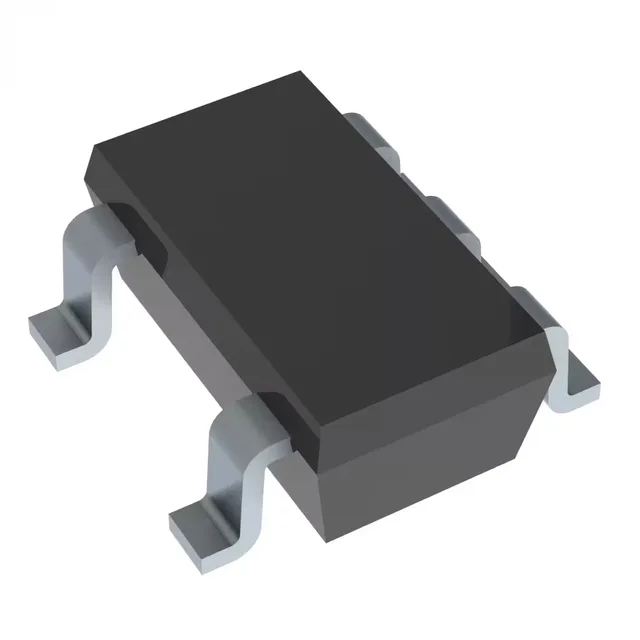
Texas Instruments TPS2818DBVR — Analog & Data Acquisition

TPS2818DBVR Low-Side Gate Driver, 2A Peak, SOT-23-5

MPNTPS2818DBVR
End of Life

Texas Instruments TPS2818DBVR, single low-side N-channel MOSFET gate driver, 2A peak output source/sink, 14ns typ rise/fall, 4V to 14V supply, inverting input, SOT-23-5 package, -40°C to 125°C operating temperature.

$1.92Ref. price · indicative, final on quote
PackagingSC-74A, SOT-753
StockContact for availability
MOQ1 pcs
  • 100% new & originalTraceable channels only — no refurbs, no pulls, no remarked parts.
  • Date & lot codes on quoteStated per line before you commit; label photos on request.
  • MSL-compliant ESD packingMoisture-sealed bags with indicator cards; reels photo-verified.
  • PayPal buyer protectionPay by T/T, PayPal or Payoneer — card payments covered end to end.

Specifications

TPS2818DBVR Technical Specifications
ParameterValue
Gate typeN-Channel MOSFET
Input typeInverting
Channel typeSingle
Mounting typeSurface Mount
Voltage4V ~ 14V
Logic voltage - VIL, VIH1V, 4V
Current - peak output (Source, sink)2A, 2A
Operating temperature-40°C ~ 125°C (TA)
PackageTape & Reel (TR); Cut Tape (CT)
CaseSC-74A, SOT-753
Number of drivers1
Driven configurationLow-Side
Rise (Fall time)14ns, 14ns

Product details

Single low-side driver for fast N-channel switching

The Texas Instruments TPS2818DBVR is a single-channel low-side gate driver designed to drive N-channel MOSFETs. It delivers 2A peak source and 2A peak sink current, with typical rise and fall times of 14ns each. The inverting input logic accepts thresholds of 1V (VIL) and 4V (VIH), making it compatible with 5V logic families and some 3.3V systems with level shifting. Supply range is 4V to 14V, covering common 5V and 12V bias rails used in industrial power supplies, DC-DC converters, and motor-drive stages. The part is housed in a SOT-23-5 package (SC-74A, SOT-753) and rated for -40°C to 125°C ambient operation, suiting it for outdoor telecom, factory automation, and under-hood automotive environments.

2A peak drive — what it means for the switching loop

The 2A peak source and sink capability directly determines how fast the gate capacitance of the external N-channel MOSFET charges and discharges. With 14ns rise and fall times, this driver can switch a moderate-sized MOSFET (e.g., 1-2 nC total gate charge) in tens of nanoseconds, minimizing transition losses in a 100-500 kHz switching regulator. For larger MOSFETs with higher gate charge, the peak current still provides strong drive, but the actual switching speed will be limited by the driver's output resistance and the gate resistor. The inverting input means a logic high on the input turns the MOSFET off — factor that into your control logic polarity.

Temperature range and environment

Rated for -40°C to 125°C ambient, this driver can be deployed in engine-bay electronics, outdoor base stations, and industrial motor drives where the PCB sees wide thermal swings. The SOT-23-5 package has modest thermal dissipation — the junction temperature rise at 2A peak is brief (pulsed), so continuous dissipation is limited by the average gate-drive power. For high-frequency switching with large MOSFETs, ensure the average power stays within the package's thermal limits.

Sourcing and lifecycle

The TPS2818DBVR is listed as Active by Texas Instruments with ROHS3 compliance. For production BOMs, this part is available through independent distribution and can be quoted to order. The SOT-23-5 footprint is common and easy to source in Tape & Reel (TR) or Cut Tape (CT) formats.

Frequently asked questions

Can TPS2818DBVR drive both high-side and low-side?

No, the TPS2818DBVR is a low-side driver only. It drives an N-channel MOSFET with the source connected to ground. For high-side drive you need a bootstrap or charge-pump topology with a different driver.

What is the difference between TPS2818 and TPS2819?

The TPS2818 has an inverting input (logic high turns the output low), while the TPS2819 has a non-inverting input. Both are single low-side drivers with the same 2A peak output and 14ns rise/fall times. Choose based on your control logic polarity.