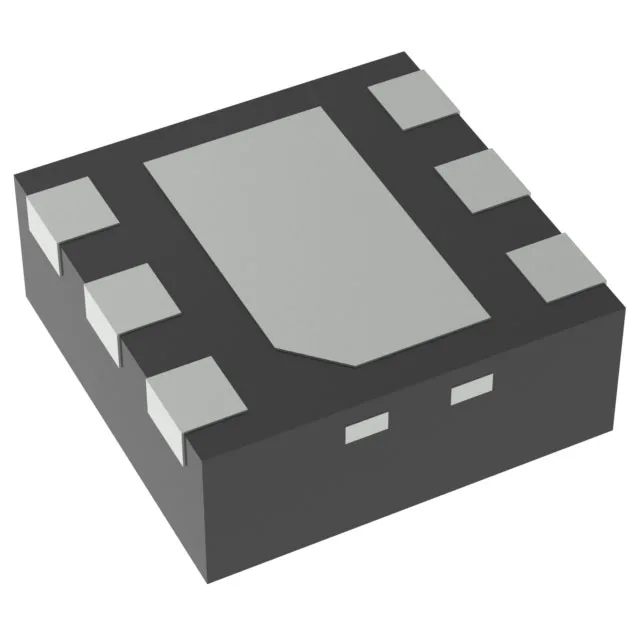
100 mOhm Rds(on) in a 2x2 mm WSON — the thermal trade-off
The TPS2550DRVTG4: Its typical on-resistance of 100 mOhm at 1.1 A maximum output creates an I²R loss of about 121 mW at full load. That heat must flow through the exposed pad to the board copper; the small package means the PCB land pattern and via array under the pad set the real current ceiling, not the 1.1 A number alone.
Adjustable current limit and slew-rate control
Fault protection covers three failure modes: adjustable current limiting (set by an external resistor), over-temperature shutdown, and undervoltage lockout. The slew-rate controlled turn-on limits inrush current into capacitive loads — useful when switching a USB port or a sensor rail where the downstream decoupling cap is large relative to the load current. The On/Off interface is non-inverting, so a logic high on the enable pin turns the switch on. No separate Vcc supply is needed; the device powers itself from the load voltage rail.
150°C junction — where this switch earns its keep
That makes it a fit for under-hood automotive zones, engine-bay sensor supplies, or industrial enclosures where ambient air hits 85°C and self-heating adds another 30-40°C.