At 2 A the typical 53 mOhm on-resistance drops about 106 mV across the switch. For a 1 V rail that is over 10 % loss, so budget the voltage drop against the load's minimum supply. The switch is a single N-channel MOSFET configured as a high-side, non-inverting, 1:1 ratio pass element. No separate Vcc supply is required — the load voltage powers the gate drive internally.
Slew rate control and load discharge — inrush and output state
Slew rate controlled turn-on limits the inrush current into capacitive loads, which keeps the upstream supply from drooping. The integrated load discharge pulls the output to ground when the switch is disabled, preventing the output from floating — useful when the downstream circuit expects a known logic level during power-down. The On/Off interface is a single logic-level input that controls the switch state. Input type is non-inverting.
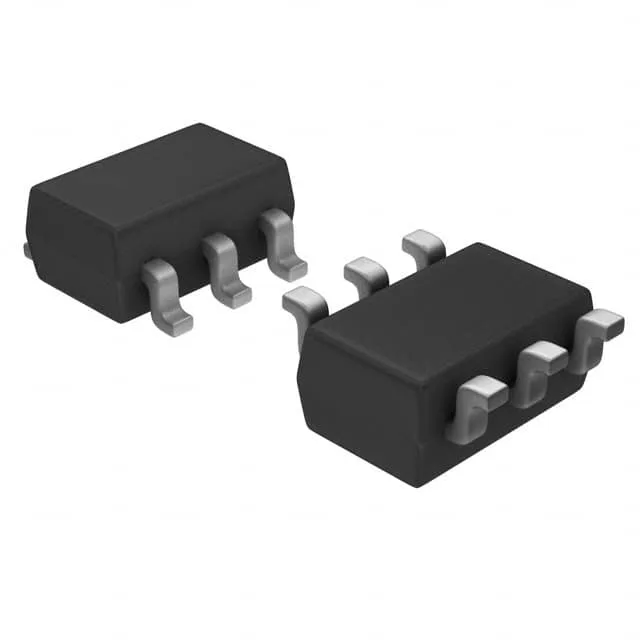
SOT-23-6 — footprint and field swap
No thermal pad to solder — the six pins are all on the sides, so rework with a soldering iron is possible if you are careful. The small body means the board area cost is low, but the thermal dissipation is limited to what the copper pads and traces can sink.