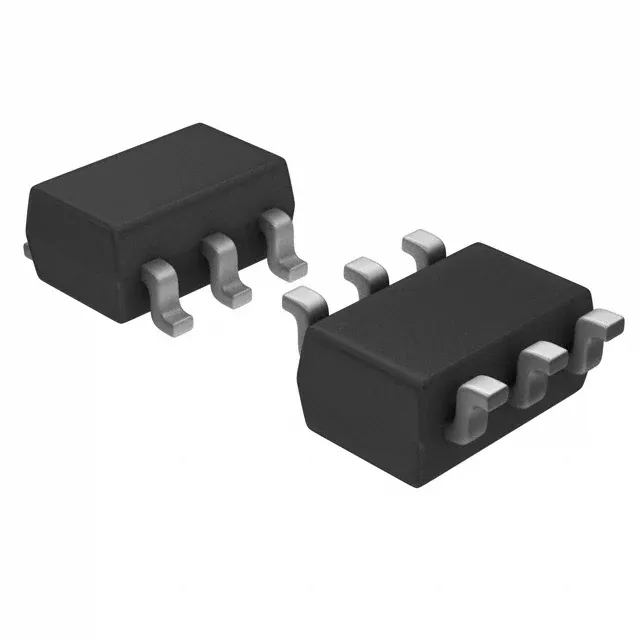
High-side load switch with controlled turn-on
It handles load voltages from 2.7 V up to 18 V and delivers up to 2 A continuous output. The typical on-resistance of 79 mOhm keeps conduction losses low enough that at 2 A the I²R dissipation sits around 316 mW — within the SOT-23-6's thermal capability with reasonable copper on the board. The switch is controlled by a single On/Off logic input (non-inverting) and does not require a separate Vcc/Vdd supply; the gate drive is derived from the load voltage itself.
Two integrated features address common power-rail headaches. Slew rate controlled turn-on limits the inrush current when a capacitive load is connected, which prevents the upstream supply from drooping and avoids false resets on shared rails. The load discharge feature pulls the output to ground through an internal resistor when the switch is disabled, so the output node does not float — important when the downstream load is a CMOS input that might latch if left undriven.
Fault protection: UVLO and thermal shutdown
The TPS22810DBVR includes undervoltage lockout (UVLO) and over-temperature protection. UVLO holds the switch off if the input voltage drops below the threshold, preventing the pass FET from operating in the linear region where dissipation would spike. Thermal shutdown disconnects the output if the die temperature exceeds the limit — a last-resort safeguard against a sustained overload or a short circuit. Note that there is no dedicated overcurrent protection; the part relies on the thermal shutdown to handle fault conditions, so the load should be fused or current-limited externally if a hard short is possible.