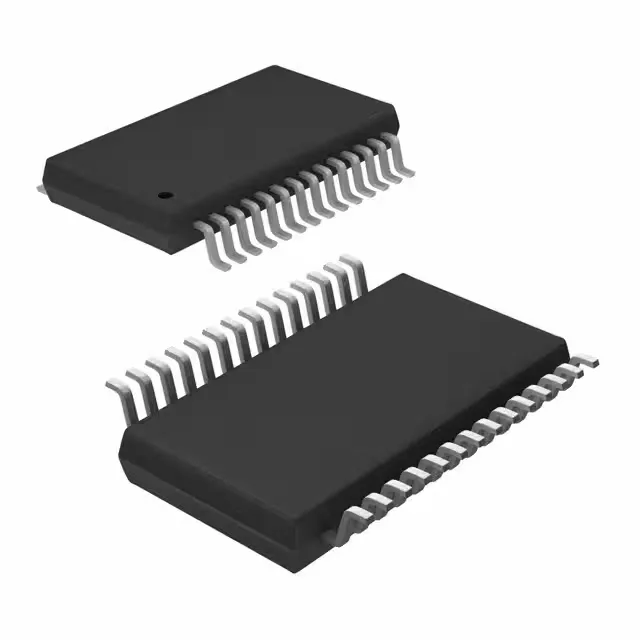
Texas Instruments TPS2226DBR — Power Management (PMIC / Gate Driver)

TPS2226DBR PCMCIA Power Switch, 4-Ch, 95mOhm, 30-SSOP

MPNTPS2226DBR
Active

Texas Instruments TPS2226DBR, PCMCIA Switch, 4 Outputs, High Side, 95mOhm, 1A, 3.3V/5V/12V, Serial Interface, Status Flag, 30-SSOP, -40°C to 85°C.

$3.5070Ref. price · indicative, final on quote
Independent supplier — new & surplus stockAuthenticity-screened · ESD-safe packingListing updated Jul 2026

Specifications

TPS2226DBR specifications
ParameterValue
TypePCMCIA Switch
MountingSurface Mount
Voltage - load3.3V, 5V, 12V
Voltage - supply (Vcc (Vdd))Not Required
Output current1A
I/O channels4
InterfaceSerial
Operating temperature-40°C~85°C(TA)
PackageTape & Reel (TR)
FeaturesStatus Flag
Rds on95mOhm
Case30-SSOP (0.209\", 5.30mm Width)
Fault protectionCurrent Limiting (Fixed), Over Temperature
Output configurationHigh Side
Ratio - Input:Output3:4

Product details

PCMCIA slot power — one chip handles Vcc and Vpp

The TPS2226DBR is a four-output high-side PCMCIA power switch array from Texas Instruments, designed to supply the 3.3 V, 5 V, and 12 V rails a PCMCIA or CardBus slot demands. It integrates four independent switches with a serial interface for output control and a status flag that reports fault conditions back to the host controller.

95 mOhm on-resistance per channel at 1 A

Each of the four outputs is rated for 1 A continuous with a typical Rds(on) of 95 mOhm. That on-resistance keeps conduction loss under 100 mW per channel at full load, which is manageable inside the 30-SSOP package without forced airflow. The 3:4 input-to-output ratio means three control signals select which of the four outputs are active — standard for PCMCIA Vcc/Vpp sequencing.

Built-in fault protection — no external sense resistor

Fixed current limiting and over-temperature shutdown are integrated on-chip. If a PCMCIA card draws excessive current or the die temperature exceeds the threshold, the switch limits the output and the status flag asserts. The host controller reads the flag via the serial interface and can power-cycle the slot. This eliminates the external current-sense resistor and comparator a discrete implementation would need.

For a BOM that already qualifies this footprint, there is no urgency to stockpile or qualify a second source — the supply chain is stable.

Frequently asked questions

Is TPS2226DBR compatible with 3.3V and 5V systems?

Yes. The switch array handles 3.3 V, 5 V, and 12 V load voltages — the three rails a PCMCIA slot needs for Vcc and Vpp programming.

What are the alternatives to TPS2226DBR?

The TPS2226 family includes several variants (e.g., TPS2226A, TPS2226B) that share the same 30-SSOP footprint and pinout. The key difference is the serial interface protocol and fault-reporting format — confirm the host controller's serial timing before substituting.