PCMCIA slot power — 95 mOhm switch with triple-voltage rails
The Texas Instruments TPS2226DB is a 4-output high-side PCMCIA power switch designed to supply the 3.3V, 5V, and 12V rails required by PC Card and CardBus slots. Each output is rated for 1 A continuous, switched through a typical 95 mOhm on-resistance — low enough to keep conduction loss under 100 mW per channel at full load. A serial interface controls the 3:4 input-to-output ratio, meaning three logic signals manage four independent switch channels. The integrated status flag reports over-current or over-temperature events back to the host controller.
Fixed fault protection — no external sense resistor needed
The TPS2226DB includes fixed current limiting and over-temperature shutdown. The current limit threshold is set internally — there is no adjustment pin, so the protection profile is determined by the silicon, not external resistors. This simplifies the BOM but means the limit cannot be tuned for unusual card loads. The switch operates without a Vcc supply to the control logic — the load voltage itself powers the internal charge pump. This is a characteristic of the TPS2226 family: the device derives its gate drive from the switched rail, so the control interface is referenced to ground, not to a separate bias rail.
30-SSOP footprint and thermal considerations
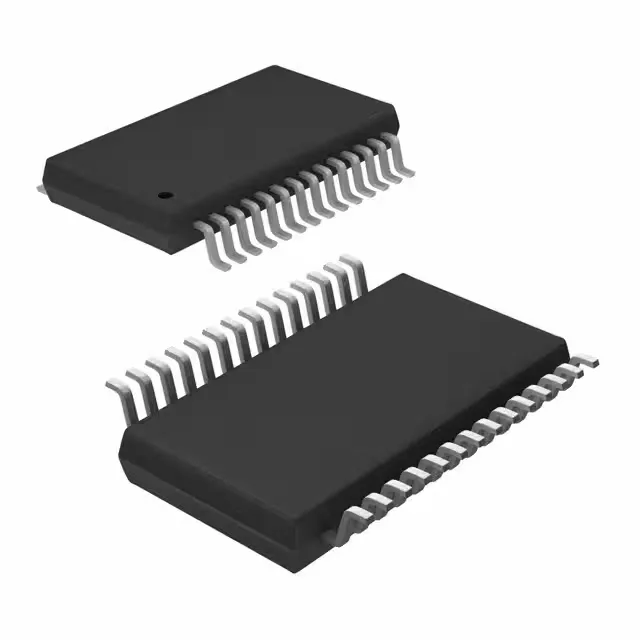
The 30-SSOP package (0.209-inch body width, 5.30 mm) has a 0.65 mm lead pitch. There is no exposed thermal pad — heat dissipates through the leadframe and PCB copper. For 1 A per channel on a 12 V rail, the 95 mOhm Rds(on) produces about 95 mW per channel; four channels simultaneously at full load generate 380 mW, which the SSOP package can handle with adequate board copper but not in a dense layout without airflow.
The base product number is TPS2226, indicating this is the standard commercial variant in the 30-SSOP package.