PCMCIA switch with Status Flag — what it tells you
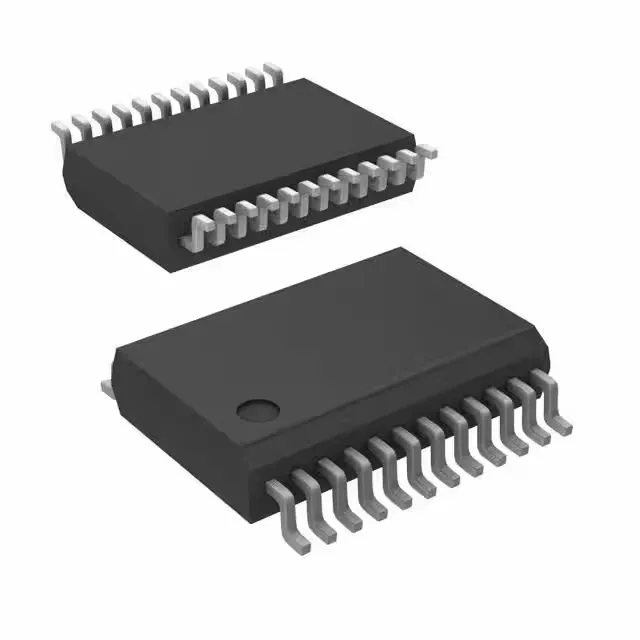
The TPS2224DB is a dedicated PCMCIA power switch from Texas Instruments, designed to supply the three voltage rails (3.3 V, 5 V, 12 V) required by PC Card slots. It integrates four high-side outputs with a 3:4 input-to-output ratio — meaning three supply inputs are distributed across four output channels, matching the PCMCIA standard's VCC and VPP power distribution. A serial interface controls the output configuration, and the Status Flag output provides a real-time feedback signal to the host controller. When the output is within regulation, the flag is asserted; if a fault — over-current or over-temperature — is detected, the flag de-asserts, allowing the system to initiate a card reset or power-down sequence.
95 mOhm Rds(on) — the voltage-drop budget
Each output is rated for 1 A continuous maximum, with a typical on-resistance of 95 mOhm. At full load, that's a 95 mV drop — negligible on the 12 V rail, but a meaningful fraction of the 3.3 V supply to the card. The 24-SSOP package (0.209-inch body width, 5.30 mm body height) dissipates that heat through the lead frame; no external heatsink is required in normal ambient conditions. No external Vcc supply is needed — the switch is self-powered from the load rails.