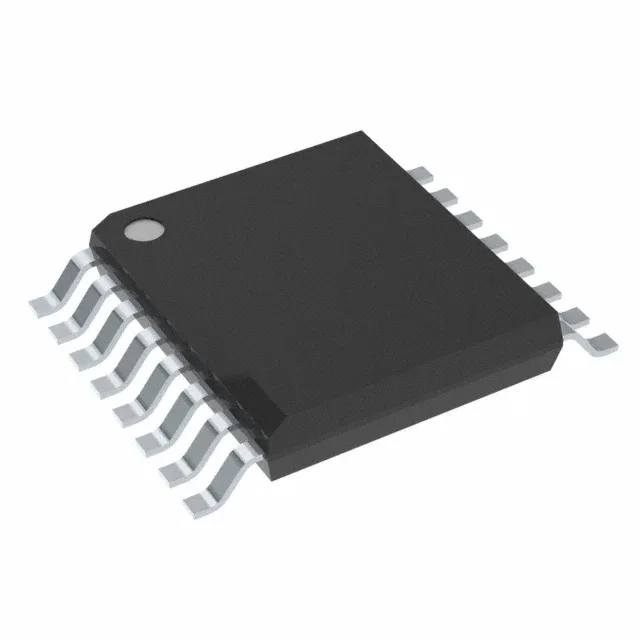
What this PCMCIA switch does on the board
It handles the 3.3V, 5V, and 12V rails that a PC Card slot needs, delivering up to 250 mA per output with a typical on-resistance of 160 mOhm. The 3:2 input-to-output ratio means you can select which of the three supply voltages (3.3V, 5V, 12V) gets routed to each of the two outputs — the parallel interface picks the rail.
Fixed current limiting and over-temperature shutdown are built in — if a card draws more than the limit or the die hits thermal threshold, the switch latches off and the status flag pin goes low. That flag is your first clue which part actually died when the slot goes dead. No separate Vcc/Vdd supply is needed — the switch powers itself from the load rails. That simplifies the board layout: just the 3.3V, 5V, and 12V inputs and the two output pins to the slot connector.
Housed in a 16-SSOP (0.209", 5.30 mm width) surface-mount package, supplied in tube.