PCMCIA power switching — the slot-level power manager
The Texas Instruments TPS2211APWR is a dual-output high-side PCMCIA power switch designed to manage the VCC and VPP supply rails for two PC Card slots. It integrates current limiting and over-temperature fault protection, with a fixed current limit at 1 A per output, and supports load voltages of 3.3 V, 5 V, and 12 V — covering the three standard PCMCIA power rails. A 3:2 input-to-output ratio means three control inputs select which of the two outputs is active, simplifying host-side GPIO allocation. The parallel interface eliminates the need for a serial bus, keeping the control logic straightforward for legacy PCMCIA controllers or CPLD-based glue logic.
This keeps the slot supply within the PCMCIA tolerance band without requiring external pass transistors or separate regulators. The low Rds(on) also limits self-heating: at 1 A, dissipation is 70 mW per channel, well within the thermal capacity of the HTSSOP package with the exposed pad soldered to a PCB copper plane. The fixed current limit at 1 A per output protects the host supply and the card connector against overcurrent events. Combined with the over-temperature shutdown, the switch can survive a sustained short on the slot without damage — the thermal protection cycles the output until the fault clears.
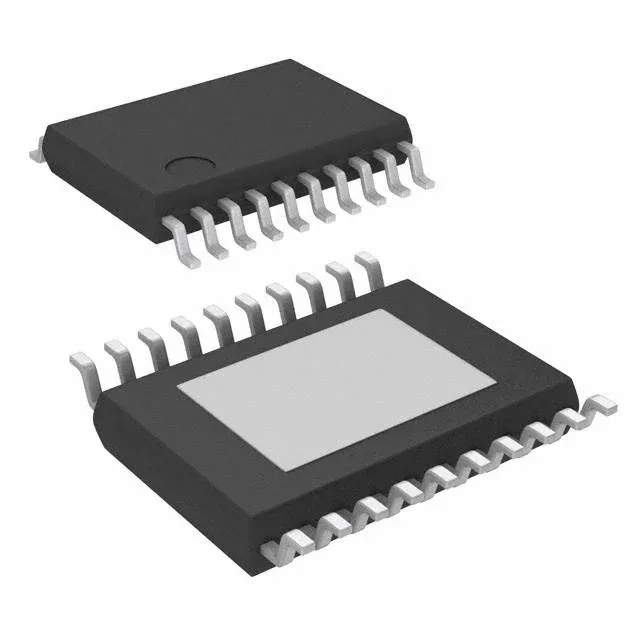
Package and thermal: the HTSSOP exposed-pad requirement
Without that, junction temperature rises above the 85°C ambient limit at full load. The 20-PowerTSSOP body is 4.40 mm wide.