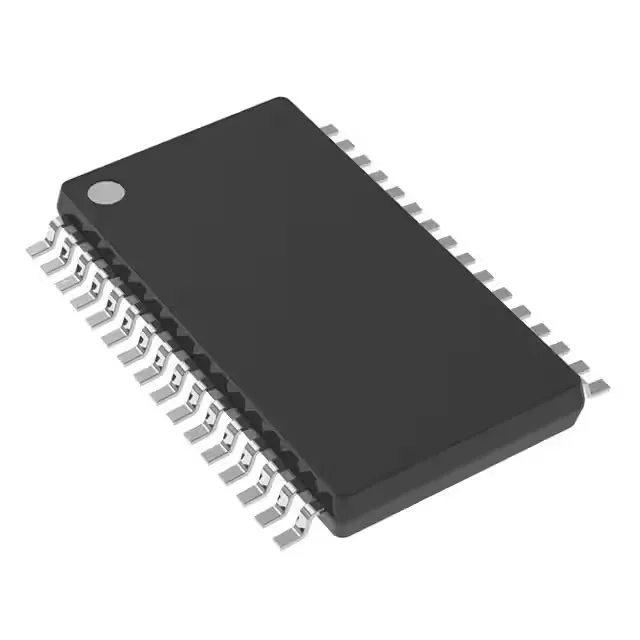
PCMCIA slot power switch — 4 channels, 103 mOhm, obsolete
The TPS2206IDAP is a four-output high-side PCMCIA power switch from Texas Instruments, designed to sequence and distribute 3.3 V, 5 V, and 12 V rails to a PC Card or CardBus slot. It integrates current-limiting and over-temperature fault protection, with a Status Flag output for fault reporting. The 3:4 input-to-output ratio means three supply rails feed four switch outputs — typically VCC1, VCC2, and VPP1/VPP2 for a single slot.
Each output is rated for 1 A continuous, with a typical on-resistance of 103 mOhm. At 1 A the conduction loss is about 103 mW per channel — negligible for a single slot, but the thermal budget adds up if the switch sits near other hot components on a tight PCB.
Serial interface and Status Flag
The switch is controlled via a serial interface — a simple shift-register protocol that selects which output receives which voltage rail. The Status Flag output asserts on over-current or over-temperature events, giving the host controller a direct fault signal without polling. This is useful in a PCMCIA controller design where the card insertion and power-up sequence must be fault-tolerant.
Each lot should be date-code verified and visually inspected — the 32-HTSSOP package is a common target for re-marking given the part's age and the continued demand for PCMCIA power switches in legacy telecom and industrial PC Card interfaces.