PCMCIA power-interface switch — four high-side outputs, three supply rails
The Texas Instruments TPS2205IDBR is a PCMCIA/CardBus power-interface switch array integrating four high-side outputs in a single 30-SSOP package. It distributes the three standard PCMCIA supply voltages — 3.3 V, 5 V, and 12 V — to the card slot with a 3:4 input-to-output ratio, meaning three input rails feed four switched outputs. Each output is rated for 1 A continuous, with a typical on-resistance of 103 mOhm. The switch operates without a Vcc supply pin — the load voltage itself powers the internal charge pump. Built-in fault protection includes fixed current limiting and over-temperature shutdown, eliminating the need for external sense resistors or comparators. A status flag output reports over-current or thermal fault conditions to the host controller.
Parallel interface and status flag — BOM simplification
The parallel control interface directly maps logic inputs to output enable states, so no serial protocol or external latch is needed. The status flag is an open-drain output that pulls low during a fault — it can be wired-ORed with other fault signals on the board. Because the switch handles 12 V for VPP programming, the 103 mOhm Rds(on) at that rail keeps voltage drop under 100 mV at 1 A, which stays within the PCMCIA specification for programming voltage tolerance.
30-SSOP package and temperature grade
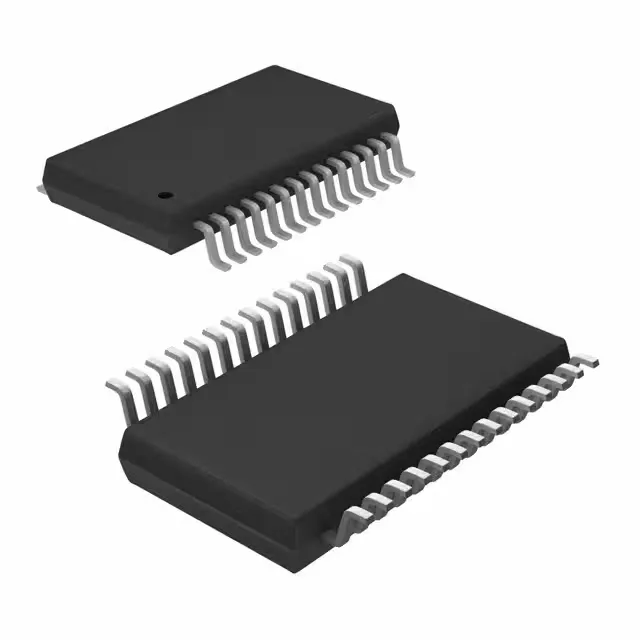
The TPS2205IDBR is supplied in a 30-SSOP package with 0.209-inch body width and 5.30 mm height, surface-mount. The base product number is TPS2205, so the IDBR variant shares the same die and electrical characteristics as the TPS2205 family.