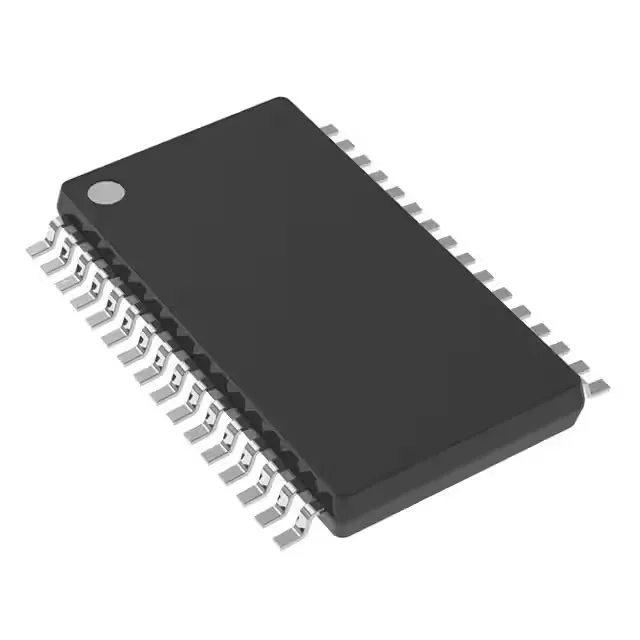
PCMCIA slot power — why a dedicated switch matters
The TPS2205IDAPR is a four-channel high-side PCMCIA power switch from Texas Instruments, purpose-built for the three-rail sequencing (3.3 V, 5 V, and 12 V) that PC Card slots require. The 103 mOhm typical on-resistance per output keeps the voltage drop to about 100 mV at the 1 A continuous current limit, which is tight for the 3.3 V rail where margin is already thin. A general-purpose load switch won't handle the 12 V Vpp programming rail or the status-flag handshake that the host controller expects.
Rds(on) and thermal budget in the HTSSOP package
At 1 A per output, each channel dissipates roughly 103 mW from conduction loss alone. The fixed current-limiting and over-temperature protection prevent cascade failure if a card draws more than 1 A, but the thermal pad is still the primary heat path; a two-layer board with minimal copper under the pad will push the junction temperature above 85 °C in still air.
That said, the PCMCIA interface is a legacy bus; new designs have largely migrated to SDIO or embedded flash.