PCMCIA power switch — four channels, three voltage rails
The Texas Instruments TPS2201IDFR is a dedicated PCMCIA power-distribution switch IC designed to supply the VCC and VPP rails of PC Card slots in notebook computers, industrial handhelds, and medical diagnostic terminals that still rely on the PCMCIA form factor. It integrates four high-side MOSFET switches with a 3:4 input-to-output ratio, meaning three control inputs manage four output channels — a mapping that matches the standard PCMCIA slot power-control scheme. Each output is rated for 1 A continuous, and the switch can source 3.3 V, 5 V, or 12 V to the load — covering both the logic supply and the 12 V programming voltage required by older flash-memory PC Cards.
Built-in fault protection and status reporting
Fixed current limiting and over-temperature shutdown protect the switch and the card from short-circuit or overcurrent events without requiring an external sense resistor. A Power Good output and a Status Flag provide digital feedback to the host controller, confirming that the output voltage has settled within regulation or flagging a fault condition.
No official replacement or cross-reference part number is listed by the manufacturer, so any substitution requires a form-fit-function evaluation of alternative PCMCIA switch ICs from the same or other vendors. Available inventory is limited to existing stock in the independent distribution channel.
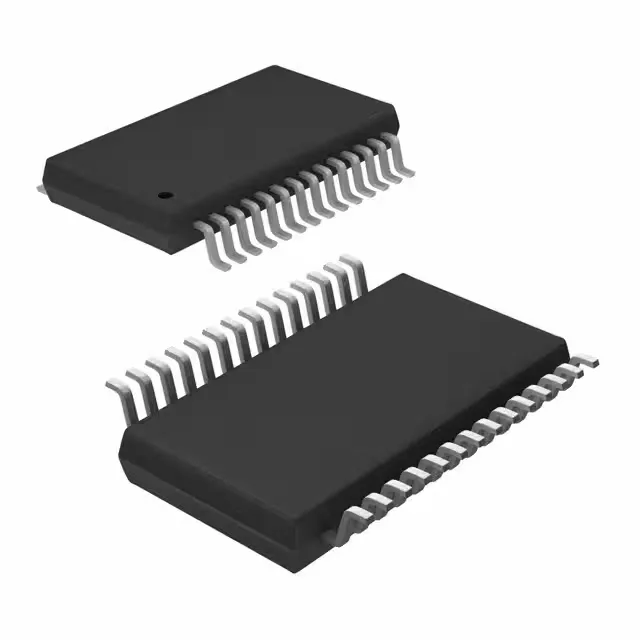
Housed in a 30-pin SSOP package with a 0.209-inch body width and 5.30 mm height, the TPS2201IDFR is a surface-mount device that fits the standard PCMCIA controller footprint used in late-1990s through mid-2000s portable designs.