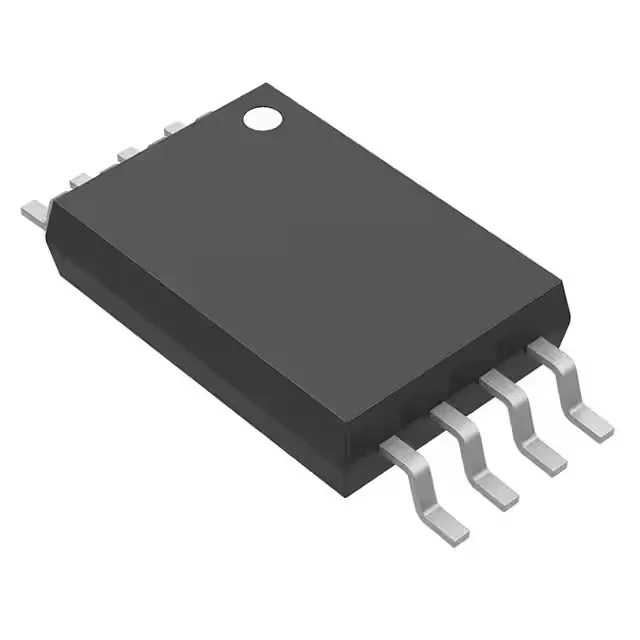
Why a 2:1 power mux instead of a diode-OR
The TPS2115PWR is a 2:1 source selector switch that lets two independent supply rails (e.g., a USB VBUS and a battery) share a single load without the forward-voltage drop and heat of a Schottky diode-OR. Its N-channel FETs deliver up to 1.25 A continuous from whichever input is selected, with a typical on-resistance that stays under 100 mΩ at 3.3 V — the exact value depends on the supply voltage and temperature, but the headline here is that the pass element burns far less power than a diode at the same current.
Supply range and quiescent current
Quiescent supply current is 55 µA typical — low enough that the mux does not drain the battery when the system is idle, but not a sub-microamp figure; if the design sleeps at single-digit microamps, the TPS2115PWR's own draw needs to be gated or the part placed after the load switch.
Switching timing and the 2:1 ratio
The 2:1 input-to-output ratio means one of two supply inputs is routed to the single output. The delay times — 1 ms on, 5 ms off — are set by internal timing and cannot be adjusted externally. For a handheld device that hot-swaps between USB and battery, the 5 ms off delay prevents the output from glitching during the transition; the 1 ms on delay gives the incoming supply time to settle before the switch closes.
That means no forced redesign for obsolescence on this BOM line.