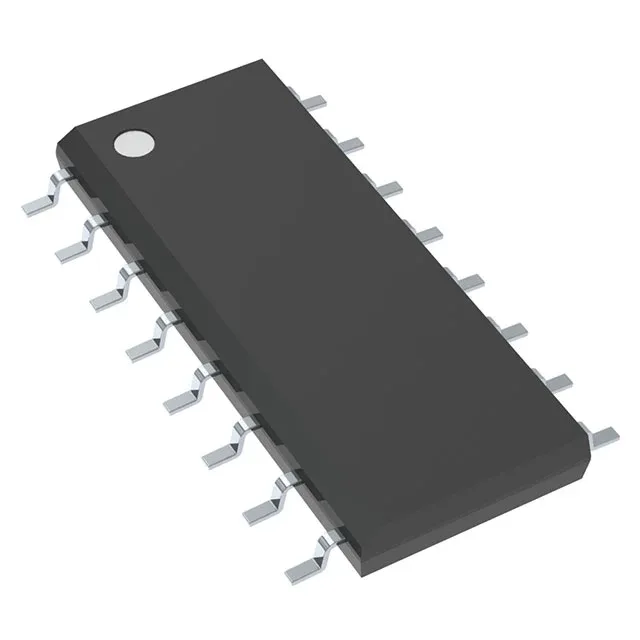
Three-channel high-side switch with fault reporting
The TPS2043BDR from Texas Instruments is a three-channel high-side power switch designed for USB and general-purpose power distribution where each output needs independent control and fault monitoring. The part provides a status flag output (open-drain, active low) that asserts when the switch enters current-limit or thermal-shutdown — a direct signal to a GPIO or system supervisor that a fault has occurred on that channel.
Output configuration and channel mapping
The three outputs are arranged with a 1:2 and 1:1 input-to-output ratio — one input drives two outputs, and the other input drives a single output. This lets the switch power one high-current USB port and two lower-current peripherals from the same device, or distribute a single input rail across all three outputs with the appropriate enable logic. Each channel is non-inverting and controlled by a logic-level On/Off interface — a high on the enable pin turns the N-channel MOSFET on. The switch is self-powered (Vcc/Vdd not required), so it draws its gate-drive charge from the load supply itself, simplifying the power tree.
Protection set — current limit, thermal, UVLO
The fixed current-limit threshold is set internally at roughly 500 mA per channel — when the output load exceeds this, the switch regulates the current rather than shutting off abruptly, which prevents nuisance resets on capacitive loads and inrush events. If the overcurrent condition persists long enough to raise the die temperature past the thermal-shutdown threshold, the switch latches off until the fault is cleared and the enable pin is toggled. Undervoltage lockout (UVLO) holds the outputs off when the supply voltage drops below approximately 2.0 V — this prevents the switch from operating in the linear region where Rds(on) rises sharply and the pass FET could overheat. The combination of fixed current limit and thermal shutdown means the part can survive a sustained short circuit on one output while the other channels continue operating normally, provided the total die dissipation stays within the package limits.
The part is supplied on Tape & Reel (2,500 units per reel) or Cut Tape, making it suitable for both high-volume pick-and-place and prototype builds. The RoHS3 compliance confirms no restricted substances above the threshold limits — no need for a separate exemption certificate for EU-market shipments.