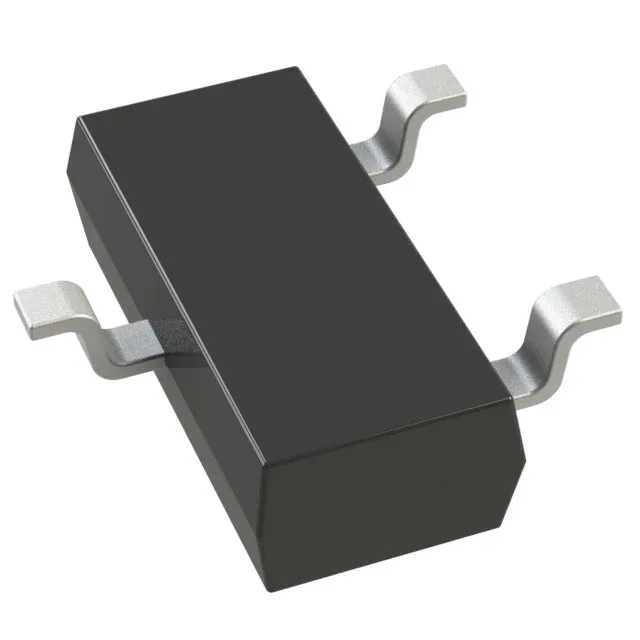
Texas Instruments TPD2E2U06DCKR — Circuit Protection

TPD2E2U06DCKR Steering Rail-to-Rail ESD, 1.5 pF, SC-70-3

MPNTPD2E2U06DCKR
Active

Texas Instruments TPD2E2U06DCKR, Steering (Rail to Rail) ESD protection diode array, 2 unidirectional channels, 5.5 V reverse standoff, 1.5 pF capacitance, SC-70-3 package, -40 to 125°C.

$0.6100Ref. price · indicative, final on quote
Independent supplier — new & surplus stockAuthenticity-screened · ESD-safe packingListing updated Aug 2026

Specifications

TPD2E2U06DCKR specifications
ParameterValue
TypeSteering (Rail to Rail)
MountingSurface Mount
Voltage - breakdown6.5V
Voltage - clamping (Max) @ ipp12.4V (Typ)
Voltage - reverse standoff5.5V (Max)
Current - peak pulse (10/1000μs)5.5A (8/20µs)
Power - peak pulse75W
Power line protectionNo
Capacitance @ frequency1.5pF @ 1MHz
Operating temperature-40°C~125°C(TA)
PackageTape & Reel (TR); Cut Tape (CT)
ApplicationsEthernet, USB 2.0
CaseSC-70, SOT-323
Unidirectional channels2

Product details

Rail-to-rail clamp for USB 2.0 and Ethernet

Its 1.5 pF capacitance at 1 MHz keeps the eye diagram clean on USB 2.0 (480 Mbps) and 10/100 Ethernet differential pairs — a common pain point where higher-capacitance TVS arrays distort the signal edge and fail compliance.

1.5 pF — why it matters for the signal budget

At 1.5 pF per channel, this part adds roughly 0.5 dB of insertion loss at 480 MHz — negligible for USB 2.0. The rail-to-rail steering topology steers the ESD current to VCC and GND rather than shunting it through a dedicated avalanche diode, which keeps the clamping voltage symmetrical and the residual energy off the transceiver pins.

Active and rated for industrial heat

The SC-70-3 package (SOT-323 footprint) fits tight PCB layouts; the two channels share a common ground pin, so the routing is straightforward for a single differential pair.

Frequently asked questions

Can TPD2E2U06DCKR be used for USB 2.0 protection?

Yes — the 1.5 pF capacitance at 1 MHz and rail-to-rail steering topology are specifically suited for USB 2.0 differential pairs. The 5.5 V standoff voltage provides margin for the 3.3 V VBUS and D+/D− signal levels without false triggering.