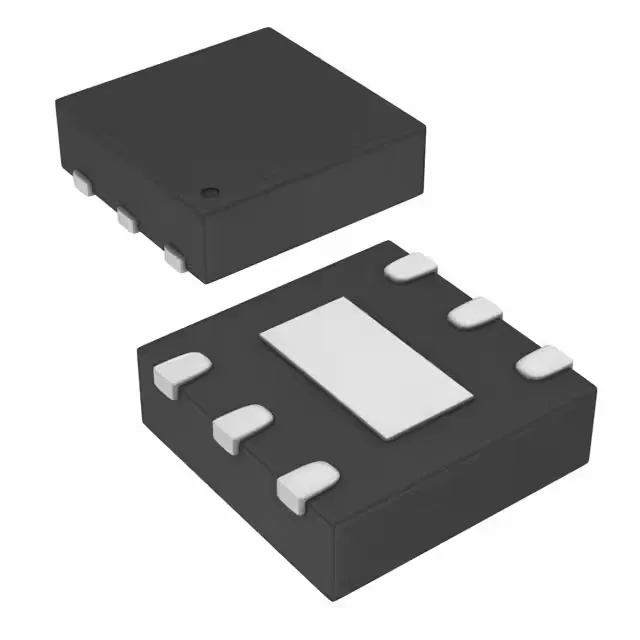
Texas Instruments TPD2E001DRST-NM — Circuit Protection

TPD2E001DRST-NM Steering TVS Diode, 2-Ch, 5.5V, 6-SON

MPNTPD2E001DRST-NM
Active

Texas Instruments TPD2E001DRST-NM, Steering (Rail to Rail) TVS diode array, 2 unidirectional channels, 5.5V reverse standoff, 11V breakdown, 6-WDFN Exposed Pad / 6-SON (3x3), Surface Mount, -40°C to 85°C, Ethernet applications.

$0.9365Ref. price · indicative, final on quote
Independent supplier — new & surplus stockAuthenticity-screened · ESD-safe packingListing updated Aug 2026

Specifications

TPD2E001DRST-NM specifications
ParameterValue
TypeSteering (Rail to Rail)
MountingSurface Mount
Voltage - breakdown11V
Voltage - reverse standoff5.5V (Max)
Power line protectionYes
Operating temperature-40°C~85°C(TA)
PackageTape & Reel (TR); Cut Tape (CT)
ApplicationsEthernet
Case6-WDFN Exposed Pad
Unidirectional channels2

Product details

Two-channel steering TVS for Ethernet PHY line protection

The Texas Instruments TPD2E001DRST-NM is a steering (rail-to-rail) TVS diode array designed to clamp overvoltage transients on high-speed differential signal lines. Its two unidirectional channels map directly to the transmit and receive pairs of a single 10/100 Ethernet port, with a reverse standoff voltage of 5.5V (max) that sits above a 3.3V supply rail yet below the typical PHY absolute maximum rating. The 11V minimum breakdown gives headroom for the clamping action without loading the signal during normal operation.

Package and rework — 6-SON with exposed pad

Housed in a 6-WDFN with exposed pad (also listed as 6-SON, 3x3 mm body), this part is surface-mount only. The pad pitch is fine enough that solder paste volume matters more than reflow profile.

For a BOM line protecting Ethernet ports on a multi-year production run, this part does not introduce obsolescence risk today.

Frequently asked questions

Is TPD2E001DRST-NM suitable for 10/100 Ethernet protection?

Yes. The two unidirectional channels cover the TX and RX differential pairs of a single 10/100 Ethernet port. The steering (rail-to-rail) topology clamps transients to the supply rails, which is the standard approach for PHY-side protection on 3.3V or 5V biased lines. The 5.5V reverse standoff keeps the diode out of conduction during normal signal swings.

What is the difference between TPD2E001DRST-NM and TPD2E001DRLR?

The two parts share the same TPD2E001 die and electrical specs — both are 2-channel steering TVS arrays. The difference is the package: TPD2E001DRST-NM comes in a 6-SON (3x3) with exposed pad, while TPD2E001DRLR is in a smaller SOT-5X3 (1.6x1.6 mm) package. The SON variant offers better thermal dissipation through the pad, which matters if the application sees repetitive surge events; the SOT variant saves board area for space-constrained designs. Pinout differs between the two packages, so a direct PCB swap is not possible without a layout change.