Active production — still a current BOM line
The TPA0212PWPG4: It is ROHS3 compliant, which means it meets the current EU RoHS exemption-free requirements — no lead or restricted substances above the threshold. That keeps it compliant for shipping into Europe without a RoHS waiver.
Class AB output stage — 2.6 W per channel into 3 Ω
The TPA0212PWPG4 is a Class AB audio power amplifier delivering 2.6 W per channel into a 3 Ω load. Class AB gives a good compromise between efficiency and linearity — it runs cooler than pure Class A but with lower crossover distortion than Class B. That 2.6 W figure is the max output at 10 % THD; for clean audio (1 % THD) the usable power is lower, so budget the actual SPL requirement against the speaker impedance. Supply voltage range is 4.5 V to 5.5 V, which means it runs from a single 5 V rail — common in USB-powered or battery-operated audio gear. The operating temperature span of -40 °C to 85 °C covers industrial and automotive cabin environments; the part can sit in a dash or an outdoor PA system without derating for temperature.
Built-in features shrink the BOM
The amplifier integrates depop circuitry, differential inputs, an input multiplexer, mute, shutdown, thermal protection, and volume control. The depop circuit suppresses the turn-on thump that otherwise needs an external mute relay or capacitor — one less part on the board. The input multiplexer lets the amp select between two stereo sources without an external analog switch, saving a small IC and its routing. Output type is 2-channel (stereo) with a separate stereo headphone output. That means the same IC drives both speakers and headphones — the headphone amp is on-chip, so no second amplifier IC is needed for the headphone jack. The shutdown pin pulls the quiescent current to near zero when the audio path is idle, which matters for battery-powered gear that needs to pass standby current limits.
24-HTSSOP package — exposed pad for thermal relief
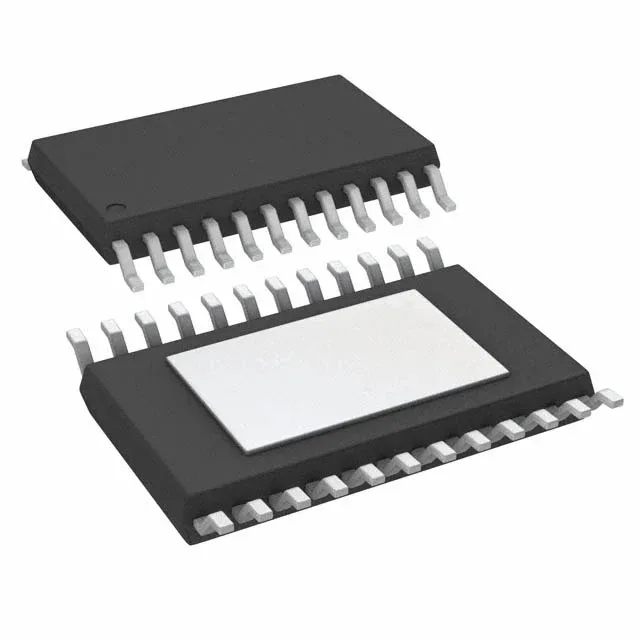
The TPA0212PWPG4 comes in a 24-TSSOP package with an exposed pad — the supplier device package is 24-HTSSOP. The exposed pad (PowerPAD) is the main thermal path: it must be soldered to a copper plane on the PCB to pull heat out of the die. Without a proper thermal land and vias, the 2.6 W output into 3 Ω will push the junction temperature above the 85 °C ambient limit. The pad also serves as the ground return for the output stage — keep the trace short and wide to minimise inductance. Mounting is surface-mount, so it reflows with the rest of the board. The 0.65 mm pitch on the TSSOP body is hand-solderable with a fine tip, but the exposed pad is best reflowed with a stencil — hand-soldering the pad underneath without bridging the centre ground to the side pins takes care. A hot-air station set to 300 °C with a small nozzle lifts the part cleanly if a rework is needed; the pad is large enough that it does not tear easily.