Fixed 3.3V rail with 150mA capacity
The TLV71733PDQNT is a fixed-output linear regulator delivering 3.3V at up to 150mA from a maximum 5.5V input rail. The 0.35V max dropout at full load means the input must stay above 3.65V to maintain regulation — a 3.6V lithium cell near end-of-discharge is marginal; a 5V USB rail has comfortable headroom.
PSRR profile and signal-chain fit
PSRR measures 70dB at 10Hz and rolls off to 43dB at 100kHz. This means the regulator attenuates low-frequency ripple from a switching pre-regulator by a factor of ~3000 at 10Hz, but above 10kHz the attenuation drops to ~140x. For an analog front-end sampling at 100kHz, the switching noise at that frequency will pass through unless the upstream converter's ripple is below the ADC's noise floor. Quiescent current is 55µA typical — low enough for always-on sensor nodes drawing microamps in sleep, but not the sub-1µA class needed for coin-cell applications that idle for months. The enable pin lets the system cut the 55µA overhead when the rail is unused.
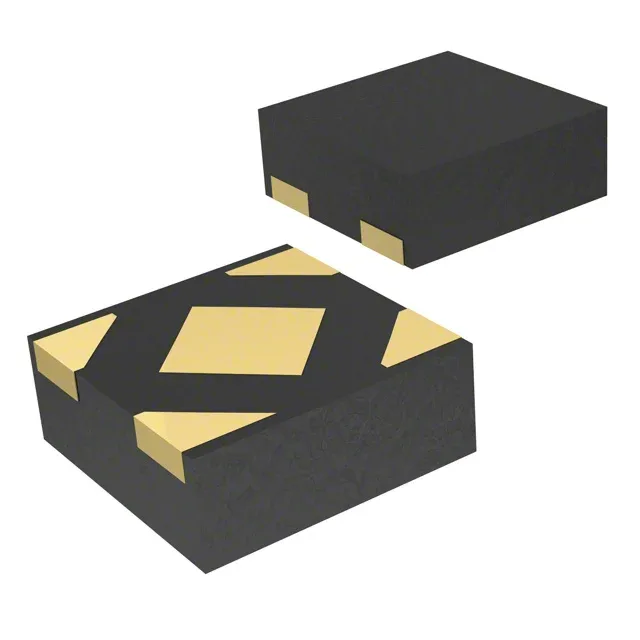
The 4-X2SON package (1x1mm body, 0.5mm pitch) is a compact leadless package with an exposed pad. The thermal pad on the bottom must be soldered to a PCB copper plane to achieve the rated power dissipation — the datasheet's thermal resistance assumes a 1-inch-square copper pad on a 2-layer board. Without that copper area, the junction temperature rises faster at 150mA output. The supplier device package is 4-X2SON (1x1mm), identical to the package / case 4-XDFN Exposed Pad. The enable pin is active-high; leave it floating or tie to VIN for always-on operation.
Protection and temperature range
Built-in protection includes over-current, over-temperature, short-circuit, and under-voltage lockout (UVLO). The UVLO threshold prevents the output from turning on until the input is high enough to keep the pass element in saturation — this avoids brownout conditions on a slowly rising supply rail.