150 mA LDO with 70 dB PSRR across the audio band
The Texas Instruments TLV71325PDQNR is a fixed-output linear regulator delivering 150 mA at 2.5 V from a maximum input of 5.5 V. The 75 µA quiescent current keeps the self-heating low in a 1x1 mm X2SON package — useful when the load is intermittent and the regulator sits on a densely populated board.
PSRR profile and what it means for noise-sensitive rails
PSRR is specified at 70 dB at 100 Hz, rolling off to 55 dB at 1 MHz. That 70 dB floor at line frequency means the regulator attenuates 120 Hz ripple from a rectified AC source by a factor of ~3000 — the output sees under 300 µV of ripple from a 1 Vpp input. The 55 dB at 1 MHz covers the fundamental of most switching converters; above that frequency the attenuation drops and external filtering is needed. Maximum dropout is 570 mV at the full 150 mA load.
Package, footprint, and reflow considerations
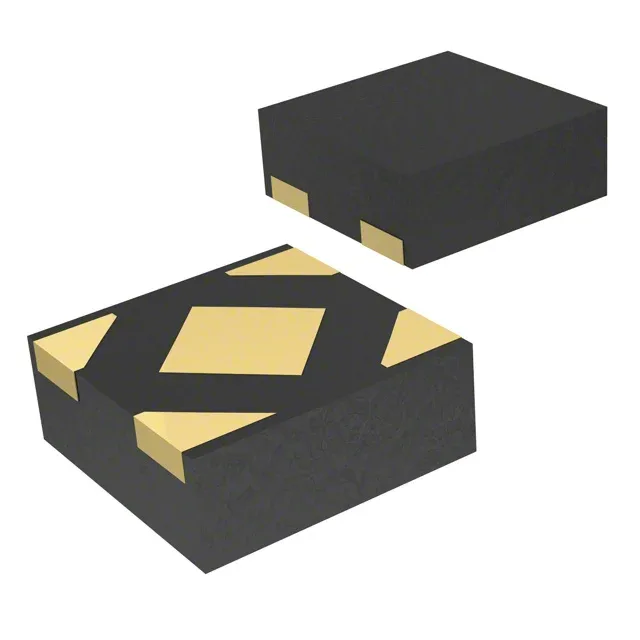
The 4-XDFN exposed pad package (1x1 mm X2SON) has a 0.35 mm pitch on the outer leads — the centre pad is the thermal and ground connection. The exposed paddle must be soldered to a PCB copper area for the 150 mA continuous rating to hold; without it the junction-to-board thermal resistance rises and the regulator thermally cycles at lower ambient temperatures. The enable pin (active high) lets the system shut down the regulator to near-zero quiescent current when the load is idle. Protection includes over-current, over-temperature, reverse polarity, short-circuit, and under-voltage lockout — the UVLO threshold prevents the pass FET from operating in the linear region during a brownout.