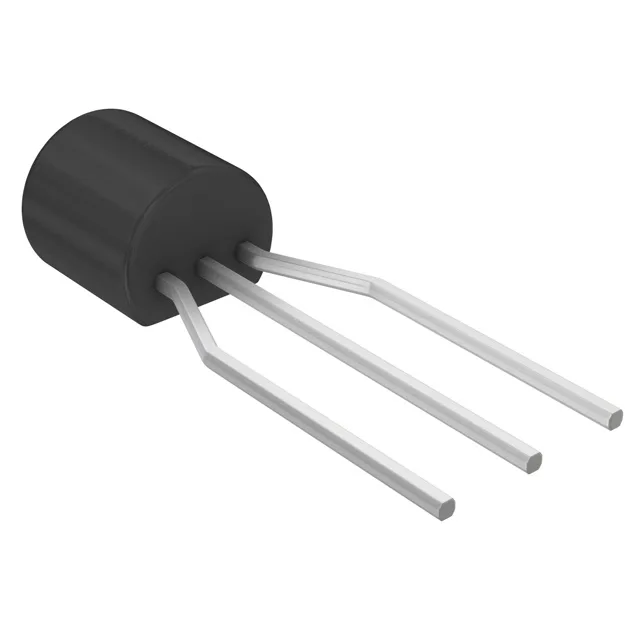
Adjustable shunt reference in a TO-92-3
It provides a stable reference voltage adjustable from 1.24V up to 6V via two external resistors, with a tolerance of ±1.5%. The shunt regulator architecture means it sinks current from a supply through a bias resistor, making it suitable for series or shunt regulation in low-power DC/DC converters, voltage monitors, and linear regulator feedback loops.
Output current and cathode current — sizing the bias resistor
The device can sink up to 15 mA of output current, which sets the maximum load the reference can drive. The minimum cathode current is 80 µA — below this the reference may not regulate properly, so the bias resistor must be chosen to keep the cathode current above that floor across all load and supply conditions. For a typical 5V rail with a 1.24V reference, a 4.7 kΩ bias resistor delivers about 800 µA, leaving plenty of margin above the 80 µA minimum.
It is not specified for industrial or automotive temperature extremes, so designs that see -40°C or +85°C need the industrial-grade TLV431 variant.