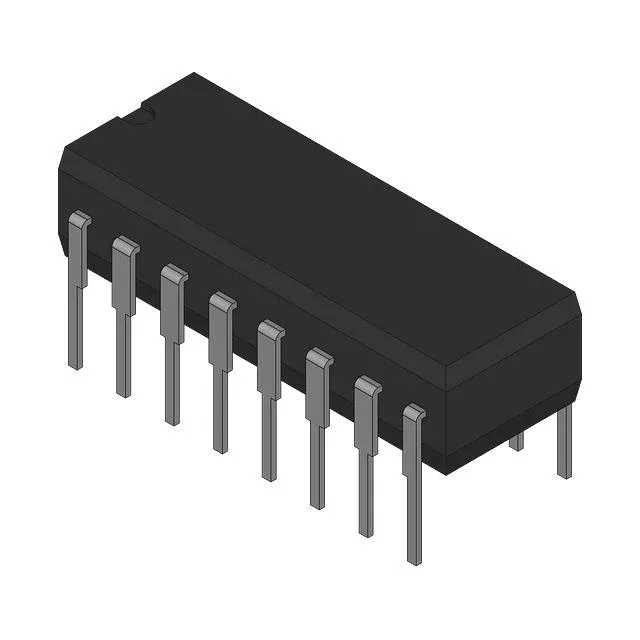
The AMD AM686/BEA is a single general-purpose comparator with a TTL output stage, housed in a 16-pin ceramic DIP (16-CDIP). It compares two analog input voltages and outputs a TTL-compatible logic level based on which input is higher. The part is designed for high-speed threshold detection, zero-crossing detectors, and pulse-width modulators where propagation delay matters — it switches in 15 ns max.
The 15 ns propagation delay supports high-speed threshold detection. The 10 mV maximum input offset at 5 V supply defines the smallest detectable voltage difference.
Package, mounting, and environment
The 16-CDIP (0.300" body width, 7.62 mm pitch) is a standard ceramic DIP with a hermetic seal. Through-hole mounting means it inserts into a socket or solders into plated through-holes — no reflow profile needed, but plan for manual or wave-solder assembly. The part ships in Bulk (tubes or trays), not tape-and-reel, so automated pick-and-place requires a tube feeder or tray handler.
It is RoHS non-compliant (leaded solder terminations), which means it cannot be used in new designs requiring RoHS exemption-free compliance.