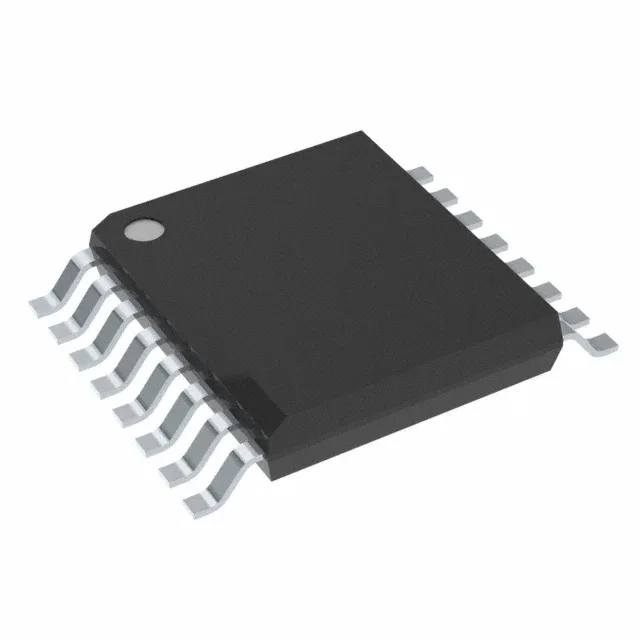
Texas Instruments TL494CDBR — Power Management (PMIC / Gate Driver)

TL494CDBR PWM Controller, Obsolete, Sourced to Order

MPNTL494CDBR
Obsolete

Texas Instruments TL494CDBR, PWM controller, 7V-40V supply, 1kHz-300kHz switching, 45% max duty cycle, 2 outputs, 16-SSOP, 0°C to 70°C.

$0.1200Ref. price · indicative, final on quote
Independent supplier — new & surplus stockAuthenticity-screened · ESD-safe packingListing updated Jul 2026

Specifications

TL494CDBR specifications
ParameterValue
Output typeTransistor Driver
MountingSurface Mount
Voltage - supply (Vcc (Vdd))7V ~ 40V
Frequency - switching1kHz ~ 300kHz
I/O channels2
Output phases1
Duty cycle45%
Operating temperature0°C~70°C(TA)
PackageTape & Reel (TR)
FunctionStep-Up, Step-Down, Step-Up/Step-Down
TopologyBuck, Boost, Flyback, Forward Converter, Full-Bridge, Half-Bridge, Push-Pull
Clock syncNo
Case16-SSOP (0.209\", 5.30mm Width)
Control featuresDead Time Control, Frequency Control
Output configurationPositive
Synchronous rectifierNo

Product details

PWM controller for multiple topologies

The TL494CDBR is a fixed-frequency PWM controller from Texas Instruments supporting step-up, step-down, and step-up/step-down converter topologies including buck, boost, flyback, forward, half-bridge, full-bridge, and push-pull. It operates from a 7V to 40V supply rail and switches from 1kHz to 300kHz, with a maximum duty cycle of 45% per output.

No official successor is recorded; the TL494 family includes many active variants, but none is a direct drop-in replacement without verifying pinout and package.

Frequently asked questions

What is the replacement for TL494CDBR?

No official replacement is listed by the manufacturer. The TL494 family includes many active variants (e.g., TL494CN in PDIP-16, TL494CD in SOIC-16), but each must be checked for pin compatibility and package fit. The TL494CDBR uses a 16-SSOP package, which is less common than the SOIC-16 version.

What is the function of TL494CDBR?

It is a PWM controller designed for a wide range of DC-DC converter topologies: buck, boost, flyback, forward, half-bridge, full-bridge, and push-pull. It includes dead-time control and frequency control features.