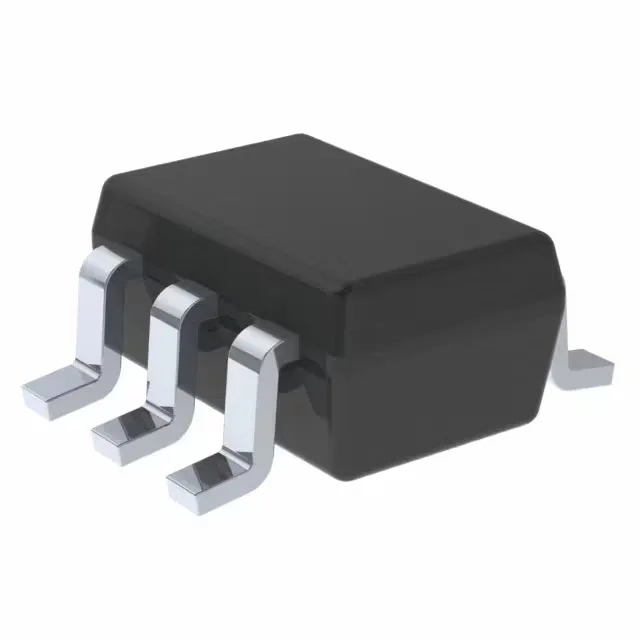
Texas Instruments SN74LVC2G14IDCKRQ1 — Crystals & Oscillators

SN74LVC2G14IDCKRQ1 – TI Automotive Dual Schmitt-Trigger

MPNSN74LVC2G14IDCKRQ1
End of Life

Texas Instruments, Automotive AEC-Q100 74LVC series, dual Schmitt-trigger inverter, 2-input, SC-70-6 package, 1.65V–5.5V supply, 32 mA output drive, 4.3 ns propagation delay at 5V.

$0.83Ref. price · indicative, final on quote
Packaging6-TSSOP, SC-88, SOT-363
StockContact for availability
MOQ1 pcs
  • 100% new & originalTraceable channels only — no refurbs, no pulls, no remarked parts.
  • Date & lot codes on quoteStated per line before you commit; label photos on request.
  • MSL-compliant ESD packingMoisture-sealed bags with indicator cards; reels photo-verified.
  • PayPal buyer protectionPay by T/T, PayPal or Payoneer — card payments covered end to end.

Specifications

SN74LVC2G14IDCKRQ1 Technical Specifications
ParameterValue
SeriesAutomotive, AEC-Q100, 74LVC
Logic typeInverter
Mounting typeSurface Mount
Voltage1.65V ~ 5.5V
Current - quiescent10 µA
Current - output high, low32mA, 32mA
Number of inputs2
Operating temperature-40°C ~ 85°C
PackageTape & Reel (TR); Cut Tape (CT)
FeaturesSchmitt Trigger
Case6-TSSOP, SC-88, SOT-363
Number of circuits2
Input logic level - low0.3V ~ 1.4V
Input logic level - high1.4V ~ 3.7V
Max propagation delay @ v, max CL4.3ns @ 5V, 50pF

Product details

Dual Schmitt inverter for automotive logic conditioning

The SN74LVC2G14IDCKRQ1 is a Texas Instruments dual inverter with Schmitt-trigger inputs, part of the Automotive AEC-Q100 74LVC series. It fits signal-conditioning roles where slow or noisy edges need clean digital outputs — think switch debounce, oscillator buffers, or sensor threshold detection in engine-control and body-electronics modules.

Supply range and drive strength

Operates from 1.65V up to 5.5V, covering the common automotive logic rails: 1.8V for modern MCU I/O, 3.3V for peripheral buses, and 5V for legacy sensor interfaces. The 32 mA symmetric output drive (both high and low) means it can sink or source enough current to drive an optocoupler LED or a small relay coil directly, saving a transistor per channel. Propagation delay is 4.3 ns typical at 5V with a 50 pF load — fast enough for CAN transceiver glitch filtering or clock buffering up to about 50 MHz without introducing skew.

Automotive qualification and lifecycle

AEC-Q100 qualified, meaning it has passed the full automotive stress suite (temperature cycling, HAST, high-temperature operating life). Texas Instruments continues to manufacture this part, and it is available for new designs. ROHS3 compliant, no exemptions to track.

Package and footprint

Supplied in SC-70-6 (SOT-363), a 6-lead surface-mount package with 0.65 mm pitch. The small footprint suits space-constrained ECU boards; the 0.65 mm pitch is hand-solderable with a fine tip but benefits from a stencil for reflow. The cut-tape option (CT) is useful for prototype runs, while tape-and-reel (TR) feeds pick-and-place for production.

Frequently asked questions

What is the difference between SN74LVC2G14IDCKRQ1 and SN74LVC2G14DCKR?

The primary difference is the automotive qualification. The non-Q1 variant (SN74LVC2G14DCKR) is a commercial-grade part without the automotive stress testing. Functionally they are identical — same Schmitt-trigger inverter, same supply range, same package — but the Q1 suffix is required for automotive PPAP submissions.

Can SN74LVC2G14IDCKRQ1 be used as a buffer?

No — this is an inverter, not a buffer. The output is the logical inverse of the input. If you need a non-inverting buffer with Schmitt-trigger inputs in the same family, look at the SN74LVC2G17 (single buffer) or SN74LVC2G125 (tri-state buffer).