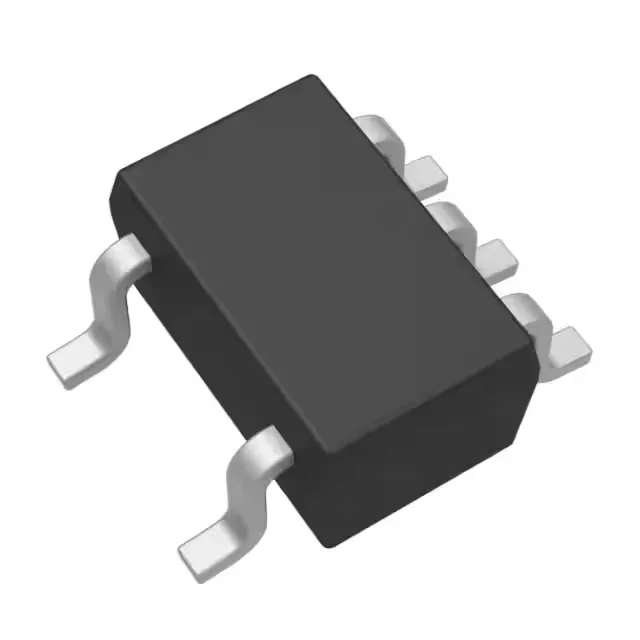
Single Schmitt-trigger buffer in SC-70-5
Schmitt-trigger input — why it matters for signal integrity
The Schmitt-trigger input provides hysteresis that cleans up slow or noisy edges — think long PCB traces, mechanical switch debouncing, or signals from a sensor with a slow rise time. Without the hysteresis, a standard buffer might oscillate or draw shoot-through current on a slowly ramping input. This part eliminates that risk, delivering a clean, glitch-free output even when the input signal is less than ideal.
Industrial temperature range and active lifecycle
That removes the sourcing risk for production builds — no last-time-buy scramble needed.
Supply range and level-shifting capability
Because the input thresholds scale with VCC, it can translate a 1.8 V logic signal to a 3.3 V output (or vice versa) when the supply on the output side matches the target voltage. This is a common trick in multi-voltage designs — one part handles both buffering and level translation.