What this single-gate open-drain buffer does on the board
It takes a logic input and drives the output low when active, leaving the output high-impedance when the input is low — that open-drain behaviour is what lets you use it for level translation (pulling up to a different voltage rail) or wired-OR bus connections. The supply range of 1.65V to 5.5V means it works across 1.8V, 2.5V, 3.3V, and 5V logic domains without a separate level shifter. The output can sink up to 32mA, enough to drive a small LED or a relay coil with a pull-up resistor.
Package and handling in the field
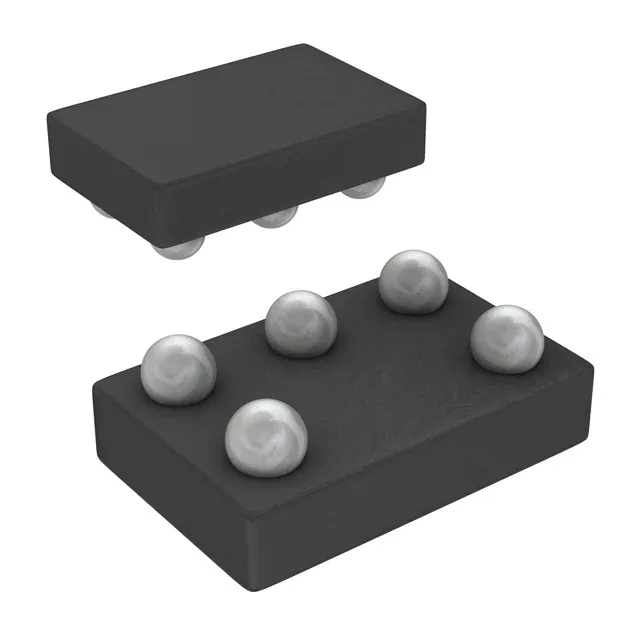
The package is a 5-ball DSBGA (1.4 x 0.9 mm), which is a tiny wafer-level chip-scale package. No lab bench needed for orientation — the ball grid is symmetric enough that a quick visual check of the marking (usually a single dot or notch) gets it right. But this is not a socketed part; you need a hot-air station or reflow oven to attach it. On a field repair, swapping this means either having a pre-programmed board or a hot-air rework station in the kit.